 My Honey Jar
Basion
바시온
Basion — Gatz & Honey ♥️ BASION
bachatea con pasion
People who dance bachata with passion
💃 𝘽𝘼𝘾𝙃𝘼𝙏𝘼 𝐀𝐜𝐚𝐝𝐞𝐦𝐲
Class KakaoTalk
Honey: honey33
Gatz: hoonidot
 ★GatzHHoneyMember
Latest first7 videos
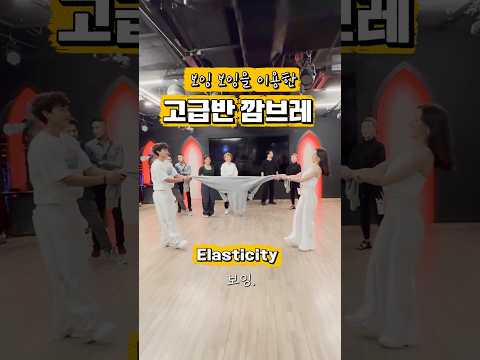
(Bachata) Advanced Cambré Using 'Boing Boing' - A Move Foreign Dancers Love - Agustín Alba Workshop

(Bachata) Agustín Alba's Overhead Spin Turn - The Fundamentals of Arm Technique feat. Movement Master Gatsu

(Bachata) Dominican bachata clinic for K-bachateros by Amanda feat. the mistake Koreans make most, spotted by Gatsu

(Bachata) The secret of counts 1 & 5 😎 Not a stop, not a move — that in-between state: LIMBO — Agustín Alba by Vasion

3 Breaths Basic — Alba's key points for Korke-style head movement, feat. Gatz

[Bachata Beginner Class] THE Marco & Sara - the bachata sensual formula M x L x P: what is sensual actually made of?

What does it really mean to dance with your body? The two pillars of body lead — Contact vs Frame by Masa, Jose y Honey




 Collecting these slowly, one at a timeThey get better every rewatch

(Bachata) Blazing styling, dazzling pattern work~ Alex & Emilia's first Korea demo by BASION

(Bachata) Barcelona that just won't quit ~ Emilia's wild Barcelona! Emilia Bootcamp by Vasion

(Bachata) Bachata × Zouk pattern work you'll want to steal! How did they unwind it? Alex & Emilia's first Korea demo by BASION

(Bachata) Daniel & Alma, the pair sending you to Spain in 2026 — their very first demo in Korea ✨ by Bassion Gatz & Honey

(Bachata) Elegant timbación, dynamite transformation! Gatz & Honey with the tension cranked all the way up

(Bachata) 🧡Bachata still alive💚 in this fusion bachata~ Lucas & Maria workshop demo, K-Sensual Week by Bacion (Guts & Honey)

(Bachata) Straight from Adrian Ros's know-how~ the 'budget Ros' imported via Bassion😆patterns inside Rob y Mica's demo!! (filmed by🌷nahie)

Peak swag! Sergio y Ana Bootcamp with Korea's finest K-bachata teams — Call On Me w/ Sora & Dalkong, Gatz & Honey, Heuksatang & Nico


“The whole key to head movement is that the head never turns on its own.”
Gatz's core principle from the workshop, emphasizing head-shoulder alignment
Watch that moment →“Your feet, head, and shoulders have to be aligned. If you just turn your head, the moment your head drops, the turn breaks.”
Explaining what goes wrong in a head roll when you turn only your head without whole-body alignment
Watch that moment →“Alignment is the magic that makes advanced head moves possible.”
Summing up what makes difficult head movement work in one word — alignment
Watch that moment →“Feet always come first. Throwing your head first is the problem — plant your foot, then move your head.”
A note on sequencing in head movement — the foot has to land first
Watch that moment →“What I noticed in Spain is that they're constantly keeping that weight–head–shoulder alignment dialed in. You have to use an energy flow like weight movement — that's what lets you run head patterns without breaks.”
Answering a question about the head movement trend in Spain, explaining how alignment and energy flow connect
Watch that moment →“The guy shouldn't block with his right hand — he should open up the space. It's the left hand that holds her in place.”
Explaining how the lead uses their hands during a partner turn
Watch that moment →“With a turn, the basic thing is that the point isn't where you arrive out there. The whole purpose is coming back into the spot you started from.”
Emphasizing what a turn is actually aiming at, while explaining the underarm turn lead
Watch that moment →“Think of a deep-rooted tree — the trunk is planted in the ground with the roots holding firm, and up on top a willow is swaying this way and that. Picture that and your upper body starts to move.”
Using a tree metaphor for turn prep: lower body anchored, upper body loose
Watch that moment →“You're not swinging the hips out and bringing them back — it comes up from the floor, and it's the upper body that rotates.”
Comparing the common mistake in turns (turning from the hips) with the right way (upper-body rotation)
Watch that moment →“Going back, there has to be resistance against the pushing force — it's not just moving forward and back, the energy has to pull and then collide.”
Explaining the direction of force and the resistance during the forward-back travel in an up-down frame wave
Watch that moment →“The elbow has to work as the lever, as the pivot point. The shoulder rotates fine, sure, but it's got a lot of limits on its range.”
Explaining the different jobs of the elbow and the shoulder in a hand change
Watch that moment →“If the follower pushes a little more, she rolls right into the leader's hand — like a juggling ball rolling in.”
Explaining the hand-contact feel in a head roll, where the follower seems to roll across the leader's hand
Watch that moment →“You have to lead the direction with the whole elbow line — that's how she reads the direction exactly. Don't keep doing it with just your hand; it has to be the whole elbow line.”
Stressing that a hand-change turn is led from the elbow line, not the hand
Watch that moment →“The lead is the bottom hand, not the top hand. She can turn perfectly well without the top hand at all.”
Calling out the habit of leading with both hands, and explaining which hand is actually doing the leading.
Watch that moment →“If her head closes right away, it hurts. So you lead it like she's relaxed and riding along — you can't just tip her over.”
Stressing how to lead a head circle gently so it doesn't strain your partner's neck
Watch that moment →“Her turn isn't happening because you can't let go of that top hand.”
Explaining how the top hand — a lead you don't even need — ends up blocking the turn because you keep hanging on to it.
Watch that moment →“It's not the head that goes — you have to let her step on the foot and turn from there.”
On the transition into a turn: the rotation has to start from the feet
Watch that moment →“If your left shoulder closes, the head closes; if it opens, the head opens too. It opens because the rib cage opens, and closes because the rib cage closes.”
Explaining how the opening and closing of the shoulder and rib cage decides the head's direction in a head circle
Watch that moment →“Even in a head circle, it has to feel like your torso is carrying your head along. If they move at the same time, it comes out looking robotic.”
Explaining that the head shouldn't move on its own — it should be pulled along by the torso to look natural
Watch that moment →“On a turn, it's not about lifting your arm — the shoulder opposite the direction you want to turn has to go in first, that's what lets her read the next move.”
Explaining why you use the counter-action of the shoulder instead of the arm when leading a turn
Watch that moment →“The point isn't to get there, it's to open her up and make space for the turn. The hand itself isn't the point — turning her is the point.”
Explaining that you shouldn't fixate on where your hand ends up, but on the purpose: creating your partner's turn
Watch that moment →“If your shoulders go flat and level, it's hard for her to read what's coming next. Giving that counter-action feel is what matters.”
Explaining how asymmetrical shoulder counter-action in the lead makes the follow's job easier to read
Watch that moment →“The reason my hips move isn't because I'm putting force into them. The energy has to come from the floor.”
Explaining that hip movement comes from your interaction with the floor, not from muscular force.
Watch that moment →“I push the floor with my toes. I'm pushing the floor away.”
Said while demonstrating the actual toe push into the floor, following the explanation that energy comes from the ground.
Watch that moment →A word about Basion? No login.