 My Honey Jar
[Formula Vol. 3] The King's Final Formula
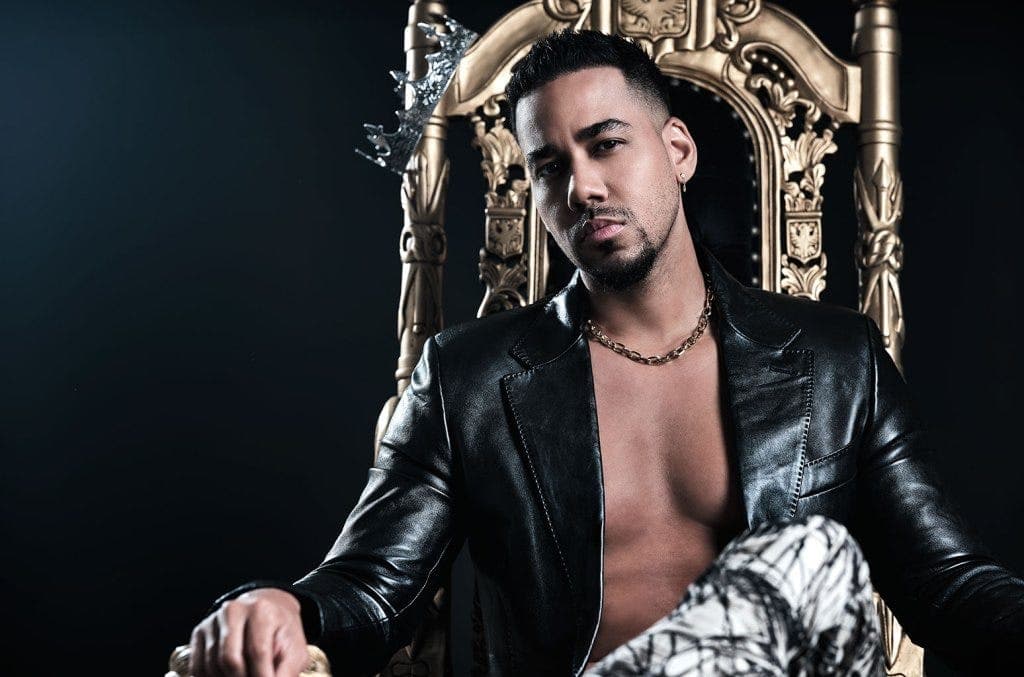
A ten-year odyssey that began in 2012 — the last album of the Formula trilogy.
Formula Vol. 3 is out. A ten-year odyssey that began in 2012, the final album of the Formula trilogy. There will be no more Formula.
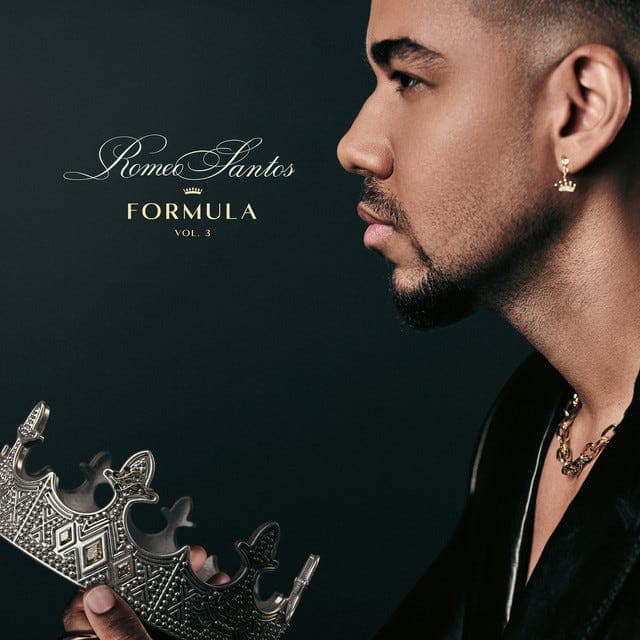
The Formula series returns seven years after FV2 in 2014. This album, reportedly three years in the making, packs in 21 tracks total — intro, one skit, a merengue, the works. What you make of each individual song, and whether it's your thing, is up to you.
But the meaning of this album lives somewhere beyond the personal taste and popularity of any single track. It's because of those two letters: FV. FV is a name that, all by itself, defines the outer limits of the bachata kingdom's territory. FV 1 was the first-generation iPhone Jobs pulled out on stage; it was the Tesla Model S Elon Musk rolled out. Things that shatter a category's whole paradigm. They keep breaking and reinventing the limits of their field, changing nothing but the number attached to the series.
So — will this album, wearing the number 3, do what 1 and 2 did? Can FV 3 be the iPhone 3GS? When someone has defined both the beginning and the end of a field, where do they head next from that borderline, and how far do they go? That was what I was curious about.
In any field, innovation is a phenomenon that makes your heart race before logic and explanation catch up. When the countdown ended and the world premiere of 'Sin Fin' started playing on YouTube, my heart started racing.
'Sin Fin' — Two Kings plant a flag on the last remaining territory
'The collab nobody saw coming' is the FV series' signature move. On 1 and 2 it was Drake and Usher. A Canadian rapper and a Black R&B star. But there was still one region left. To plant a flag on the last territory this series had to conquer, the King summoned Justin Timberlake (JT) — and finally marched into the core of mainstream white culture: 'pop'.
This is an attempt to break through and expand the limits of the two most important trends in bachata music right now.
First. Bachata may have been rapidly expanding its borders lately, but Latin artists have been the ones driving that trend. It was also the process by which bachata's internal question — how do we mix reggaetón into bachata? — flipped into an external one: how do we make use of bachata in reggaetón? A lot of exciting new Latin artists flowed into bachata through that door.
In this space, thankfully, the prince — Prince Royce — defended the dignity of original bachata with 'Te Espero'. Manuel Turizo, riding the runaway success of 'La Bachata', courted bachata hard from the reggaetón side and rose as this field's newly arrived nobility. But apart from 'La Fama' — a curious exception that's hard to call bachata outright — it was all still happening inside the Latin community.
On the other side, there's the world of pop songs bachata-fied into remixes. Those tracks have huge influence in the bachata community and have widened this world's horizon, but in terms of originality they can't represent it. Pop-leaning original bachatas have popped up here and there too, but they never broke into the major pop world.
On 'Sin Fin', Romeo Santos shatters and unifies the limits of both trends. He broke past the boundary of the Latin community, and he renewed bachata completely in original pop sound. Planting a flag in 'pop', the capital city of the mainstream, feels like a declaration: there is no longer any territory in this world that bachata can't break into.
For this final act of territorial brick-breaking, the emperor of pop, JT, was deployed. A collab with the first white major pop star. A pure-blooded white major pop star with no Latin blood in the mix.
To secure the legitimacy, they apparently brought in not just JT but Danja — the producer who worked with JT on 'Sexyback' and more. Not to make something that *looks* and *sounds* like it. To actually make the real thing.
This is also the period at the end of a long march that started in 2002 with Aventura. On Aventura's second album <We Broke The Rules> (2002) — the one that gave birth to the all-time classic 'Obsesión' — Romeo sang a Spanish rendition of N Sync's 'Gone'. Back then, that must have been a world everyone looked up to.
After that, countless bachata singers covered pop songs in Spanish. Leslie Grace sang 'Will You Still Love Me', Prince Royce sang 'Stand By Me'. Twenty-odd years later, plenty of pop still gets covered as bachata.
Twenty years on, in 2022, Romeo Santos finally summoned the very object of his imitation and had him sing original bachata in Spanish. The start, in 2002, was imitating that admired world across the divide. That's what everybody did.
But the King didn't stop there — he marched straight into that enormous world and made them sing his song, and then write it too.
Romeo Santos' journey from Aventura's <Gone> in 2002 to <Sin Fin> in 2022. Twenty years. A perfect bookend.
And it wasn't Romeo Santos the individual — it was a journey that pulled the entire genre of bachata from minor to major. Without this process, bachata might still be a dance enjoyed only in Latin America and by a small handful elsewhere. But he spread bachata worldwide with a new sound, that new sound called forth a new dance, and it pulled countless talents into bachata.
That's why we call him king. This isn't marketing rhetoric — it's what he actually pulled off. FV 3 puts a symbolic period on this king's journey.
Of course this alone won't suddenly set off a bachata-pop boom. But I'm hoping many more attempts follow this first flag the King planted on that final territory called pop. I hope it becomes the starting point for more gorgeous original bachata pop — not remixes — that makes our hearts flutter and gets us dancing.
Though, like the title 'Sin Fin (Endless)' suggests, it's not just one man's love that won't end here — the king's journey won't either.
A 1:1 hybrid of nuevo flamenco and bachata — an artistic sensation grafting two old genres together
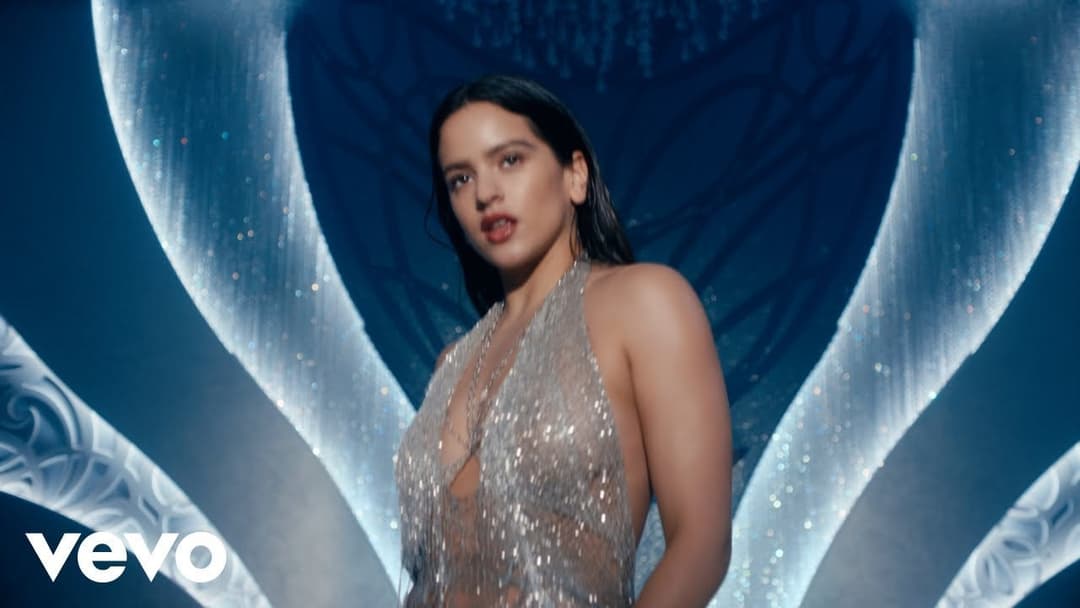
Rosalía was already a superstar. Born in 1993, born and raised in Barcelona, this Gen-Z singer's signature is flamenco reinterpreted for the modern era. Combining her talent, beauty, personality and artistry, she made the whole world listen to and watch a new kind of music and performance — call it flamenco pop, or nuevo flamenco.
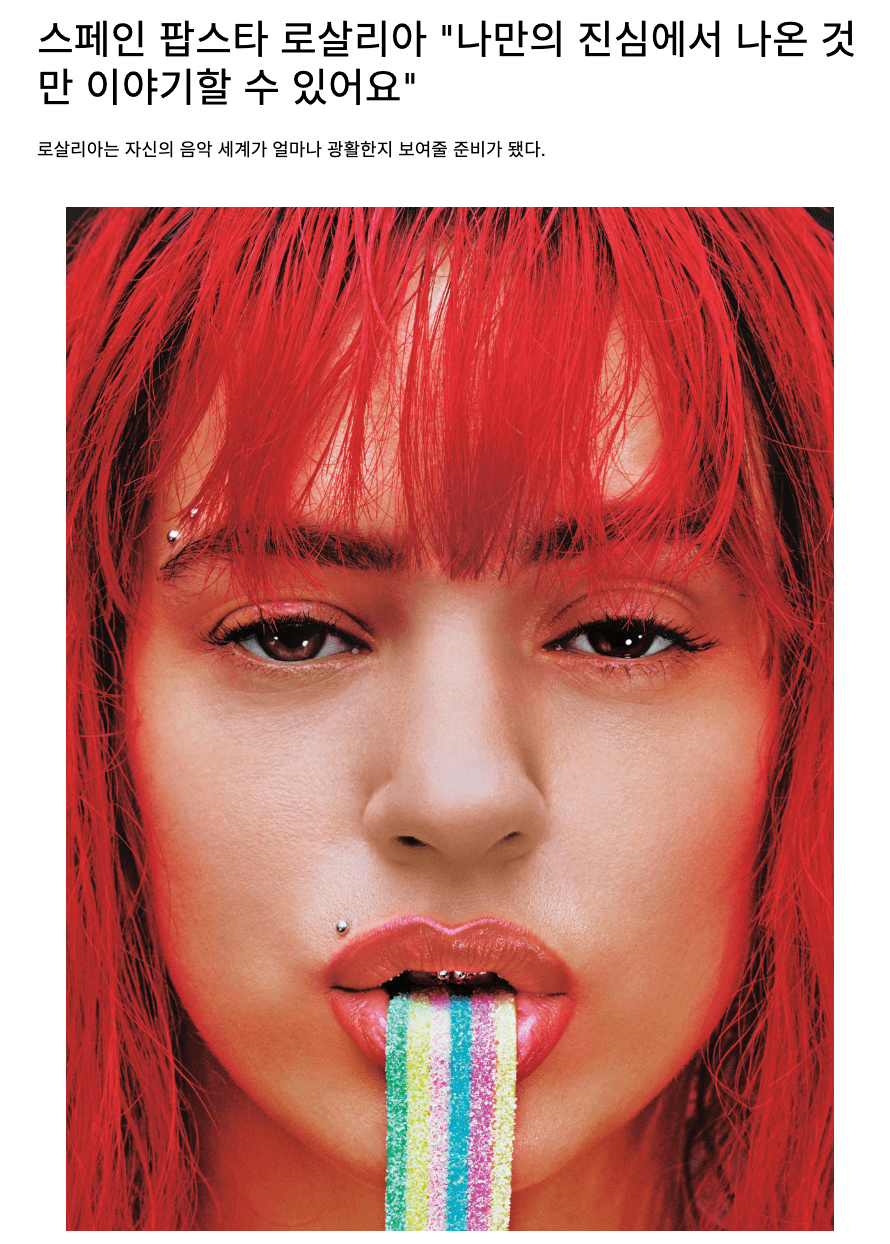
Romeo Santos wired this 'Rosalía phenomenon' into bachata. In one interview, Romeo recalls falling for Rosalía before she blew up like this. But 'El Pañuelo' is plainly a shrewd strategy: grafting Rosalía's twice-Grammy-validated artistic sensation onto bachata.
Rosalía's voice sings it out, aching. My song, my song is sorrow. To this woman left behind in a miserable middle-of-the-night breakup, Romeo says he'll become the handkerchief (el pañuelo) himself, wipe her tears, and heal her with his body. This song and video, where they call each other mami and papi, feel about ready to burst with provocative sexual tension.
Rosalía's intro is unmistakably Andalusian. She delivers pure Rosalía-brand flamenco sound, untouched by the bachata rhythm. But the moment her part ends, what follows immediately is Romeo's traditional bachata sound. And even inside that bachata bass that carries on, Rosalía keeps up her flamenco wailing — a cry like keening, recreated in her own style.
The guitar at 2:41 does the same thing. A phrase of traditional flamenco plays, Romeo makes a gesture ordering a stop like an orchestra conductor, and the guitarist's sound flips instantly into that familiar traditional bachata mambo sound.
✂️ A 1:1 hybrid of flamenco and bachata — El Pañuelo clip
Romeo asks: you like my bachata, kid? Mhm mhm. Rosalía answers like a little kid
In a video dominated by red, black and B/W, all of this is wrapped in an atmosphere like a contemporary art stage — neither authentically Spanish nor authentically Latin American. Even the dancers' movement looks like bachata and flamenco reinterpreted as modern dance. Under the king's direction.
Dani J's latest track <Gitana> also dresses bachata in Spanish flamenco sound. In the video Dani J straight-up throws down palmas (flamenco handclaps), and Spanish zenba idol Luis Andrea shows off flamenco moves.
Bachata of this type — bachata mixed with flamenco — has been coming out steadily. Most of them blend flamenco and bachata into a single melody. Depending on the track, some carry more bachata color and others sound like flamenco rhythm poured all over, but either way they don't come off as fully bachata or fully flamenco.
But Romeo Santos brings in Rosalía — flamenco singer and the hottest artist alive right now — and experiments with a musical structure that crosses flamenco and bachata 1:1. And the result is an urban sound you've never heard anywhere, neither Spanish nor Dominican, seemingly ascended to the level of art. Rosalía's nuevo flamenco met bachata and produced a new bachata.
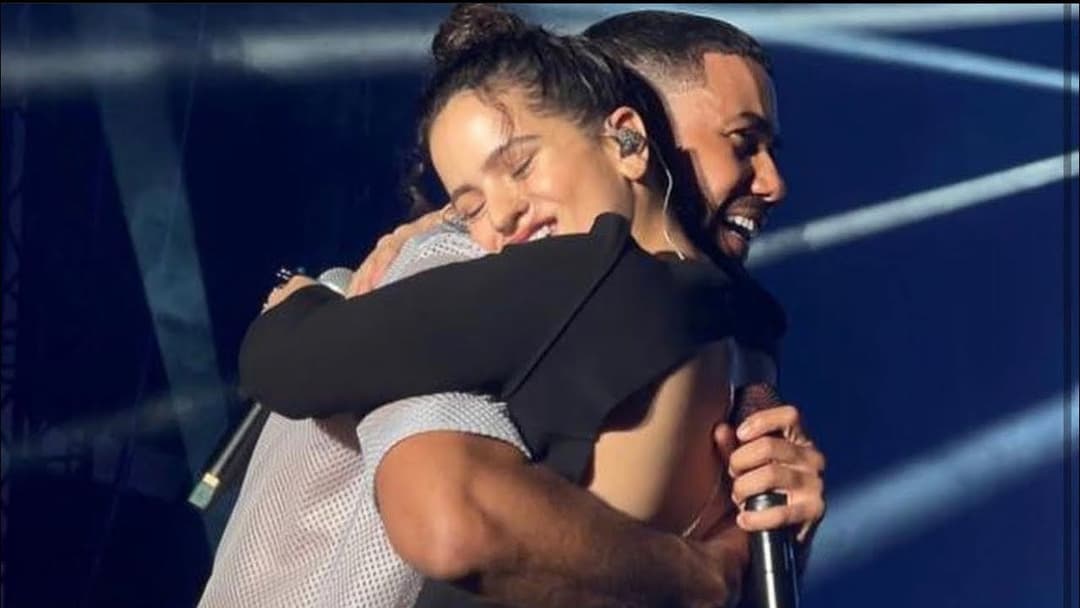
✂️ Hey kid, you like my bachata? Mhm! — El Pañuelo clip
I have no idea whether this track is good for social dancing. But it's a unique experiment that never existed before: it grafts two worlds together while keeping both alive and unaltered, producing the most modern result imaginable — one with no relation to either's origins. And the result feels close to a work of art. With a song like this, I feel like you could actually make an art piece out of bachata as a dance.
Every bachata in existence — the widest spectrum, covering all genres
Beyond this, Romeo embraced every contact point where existing bachata could expand. 'Me Extraño' is unapologetically mariachi. Christian Nodal, his collaborator on this track, is the Rosalía of Mexico — a young artist born in 1999 who breathes present-day life into traditional Mexican mariachi sound.
If you enjoy sensual bachata, go for Solo Contigo, Ayudame and Boomerang; if you're Latin American, Suegra, Perro, La Ultima Vez, Bebo and 15,500 Noches will hit. Could those same people love Sin Fin just as much? This track that I personally have on repeat at least three times a day — they might just skip right past it.
Dominicans will feel their chests get hot over 'Culpable' with their national legend rapper El Lápiz Consciente, and 'SIRI' with new-generation reggaetón star Chris Lebron. Spaniards will be proud of 'El Pañuelo', which grafts on their own tradition. People like me — raised on pop music, just here to have a good time — will be bouncing off the walls to 'Sin Fin' and 'Sexo Con Ropa'.
And all of those people already loved the masterpiece that is 'Sus Huellas'. So grand, so gorgeous, the most quintessentially Romeo Santos song there is. Honestly, I half suspect FV 3 already fulfilled its whole popular calling — the one that reaches everyone — with this single track. And the rest of the songs, Romeo Santos filled every last one of them with experiment and pioneering spirit and strategic, artistic choices that finely segment a colorful range of targets, never letting a single track just slide by.
I listen to these songs one by one, channeling a different nationality for each. Does a person exist with a multinational monster-sensibility who'd love every single track on this album? Setting aside the true fans who love everything Romeo Santos, this album feels like a thorough Divide & Conquer of the diverse spectrum of bachata as it currently exists.
The distance between Me Extraño and Suegra, between Sin Fin and El Pañuelo. The distance between Rosalía, Justin Timberlake and Luis Miguel. An album where all of these show up together. The area you get by connecting those endpoints — that's the territory of the bachata kingdom that Romeo Santos widened and pioneered with FV3. It's the work of pushing bachata's horizon into worlds that weren't possible before.
So the real verdict on this album isn't here and now. How much further will bachata widen its horizon in this major-music space going forward? Will it, like the past FV releases did, once again pull bachata up into a bigger world? From here on, I plan to wait and watch for that all over again.
A new formula from the king, accumulated and declared after seven years. For me, <Formula Vol. 3> is an album that takes bachata's traditional past, grafts it onto the newest things of the present, and presents the possibilities of the future.
The last of the FV series planted bachata's flag all over places bachata hadn't gone yet — but can go, and must go. FV ends here. May this flag become a north star and keep leading to more and more new music…. And may that lead to yet another new dance 🙏🙏🙏
Epilogue — "But here's the thing…"
This history probably didn't start with Romeo Santos. His music is an extension of the bachata spirit — music that survived out on the furthest margins, willing to embrace even its own mutation in order to survive. Which means that to properly understand this, I'll have to go back to the very beginning of bachata music's history…