 My Honey Jar
How Did He Become Such a Complete Package?! An Interview with Top Bachata Dancer Pablo
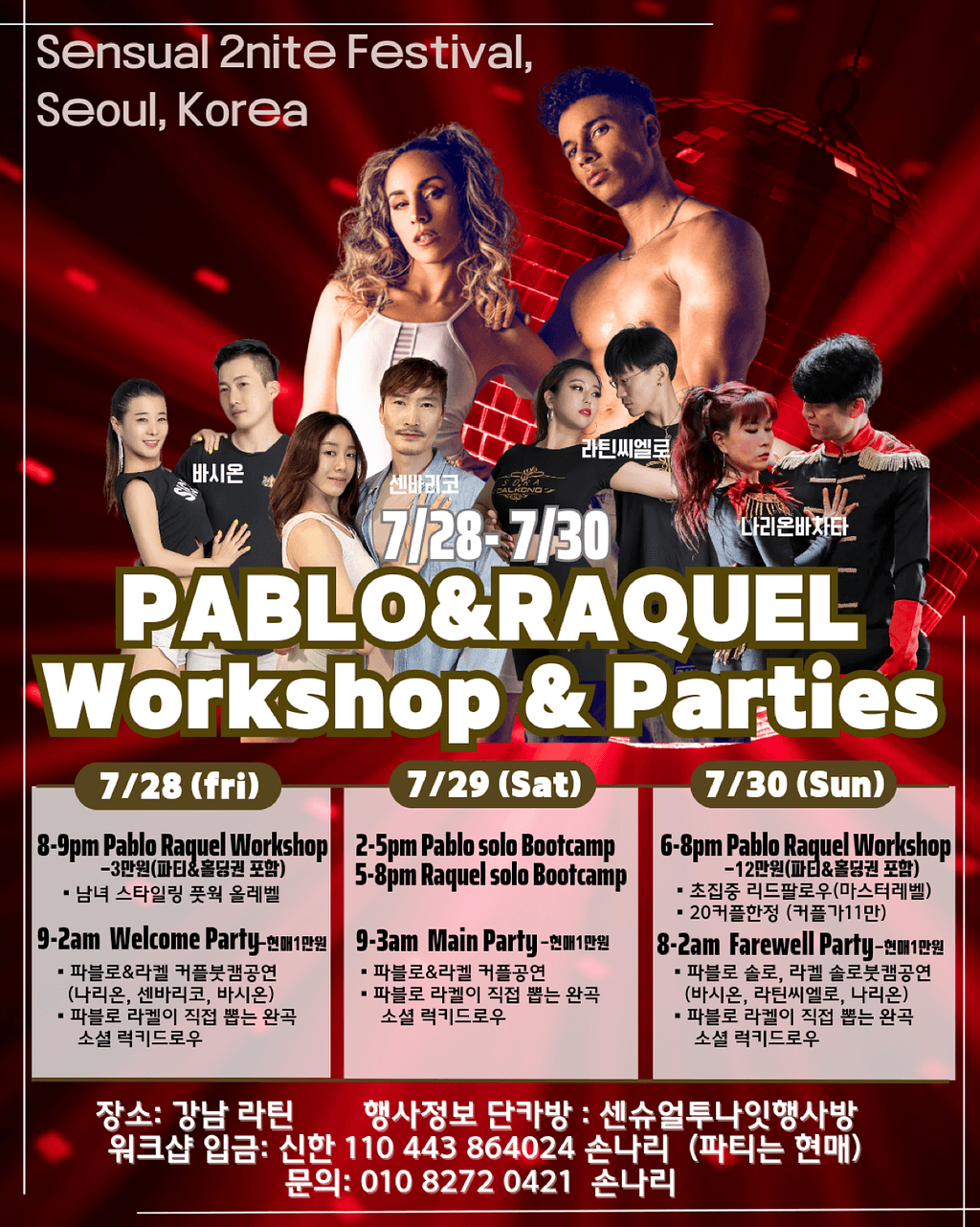
One-of-a-kind genes, a hard-working whiz. After Raquel, Pablo y Raquel are finally visiting in July.
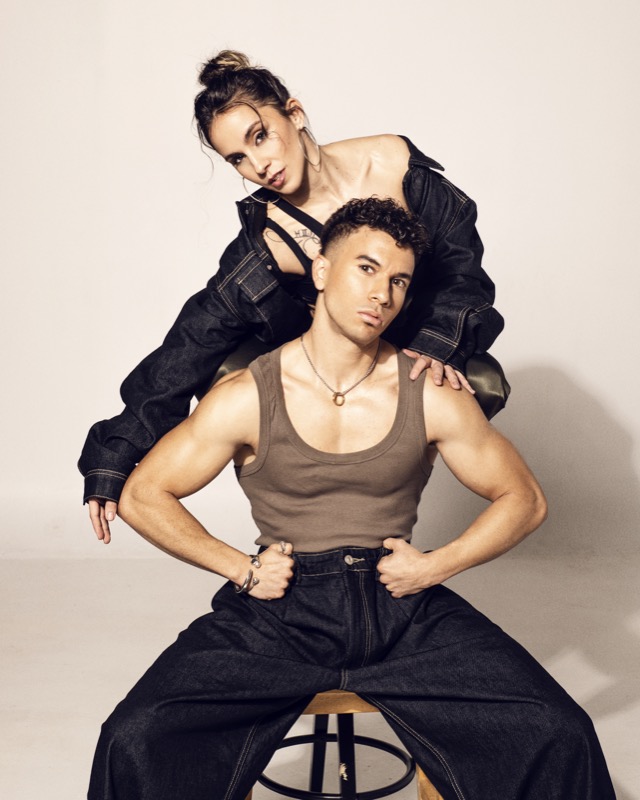
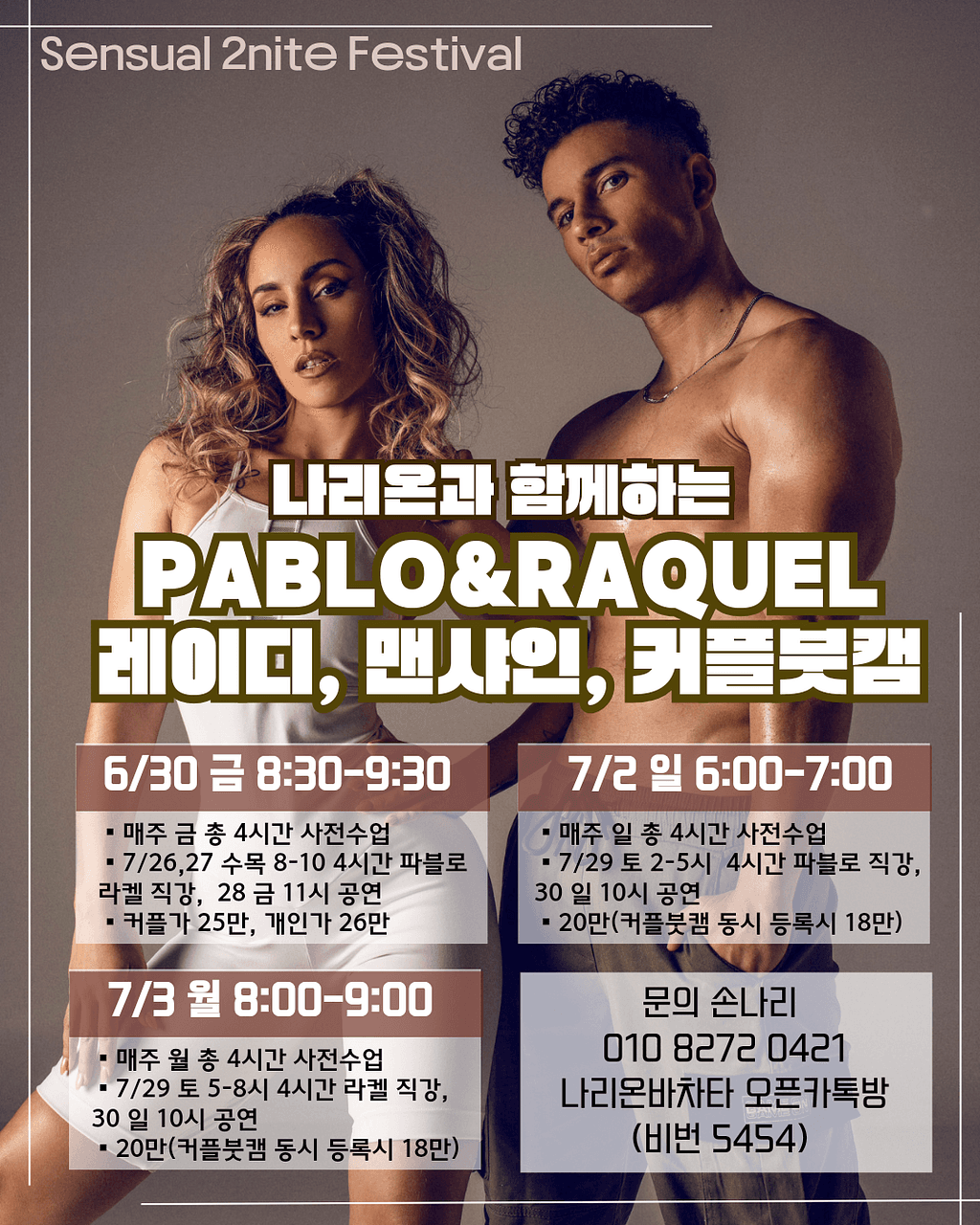
After Raquel, who moved us so deeply — Pablo y Raquel are finally visiting this July!!
After Raquel's lady styling, the workshop of my life, the time is fast approaching to meet the essence of full-package PaRa partnerwork, now with Pablo added in.
I still remember it vividly — Pablo's demos and shows are brilliant, but his theoretical foundation was deep and rock-solid too. I still can't forget his musicality class. It was one hour of theory and one hour of practice, and in that class I think I learned almost everything I now know about the structure of bachata music and musicality.
That was the first bachata musicality class I ever took, and it was the first and last time I ever just sat and listened to a pure theory lecture from an international dancer.
I've taken plenty of musicality classes since, but none has topped that one yet. Maybe this time Pablo himself will top it — that's my hope. The only one who can out-Pablo Pablo is Pablo!
Pablo of endlessly shifting faces: delivering a world-class performance one moment, then radiating full professor gravitas while seriously explaining theory, then beaming that festive, friendly Latin vibe all over the social floor.
So every time I watched Pablo, I wondered: how did this person come to know all that, and how can he deliver it so elegantly? There are lots of dancers who dance beautifully, but not many who can also articulate their own movement theoretically. Pablo, though, explained his own movement objectively and theoretically — like he was having an out-of-body experience.
Is this what happens when a Latin-American-born guy gets a systematic European education…? That was my rough guess. So in last year's article I wrote: Pablo is the Messi of bachata! (Latin DNA + European education)
But then a Pablo interview popped up recently on a Spanish bachata superfan's YouTube channel, and every mystery got solved. No — beyond that, I was genuinely floored. So Pablo really is this talented AND this hardworking.
A talented whiz who works hard on top of it — you just can't beat that… and that's Pablo! Thank goodness he's at least short (same as Raquel). Otherwise I'd seriously have to resent the gods for stacking everything on one person.
And it turns out Pablo really is Korke's true disciple. Not some casual student — he learned from Korke for a full three years. Until Korke said, I have nothing left to teach you~ time to come down from the mountain…
At first I had no plans to go as far as translating it, but every single thing Pablo said was so fascinating that I kept jotting bits down, and here we are — a whole article~
I summarized the long parts loosely, keeping just the meaning, and I didn't fact-check everything. (Who cares about the details!) Warning: may contain some mistranslations and many typos. Point out any bad translations and I'll fix them right away!
Alright, let the interview begin~~ The original interview is here👇👇👇
Q. Where were you born?
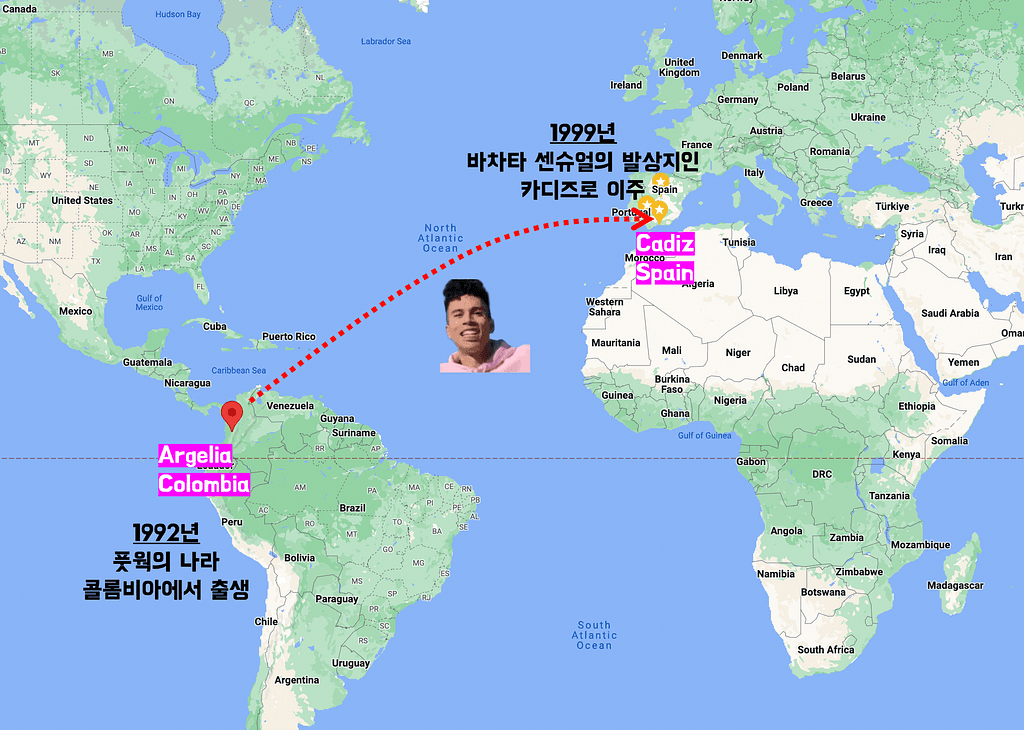
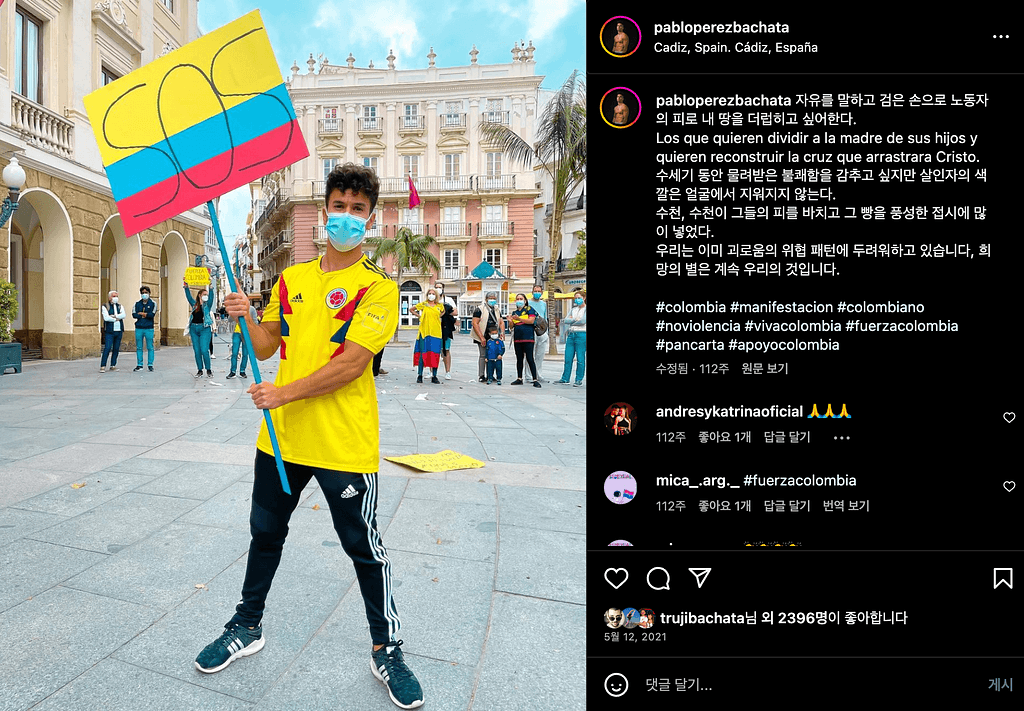
Colombia, born in 1992. I'm 31 now. From age 7 I traveled all over the world. Alegria, Pereira, Tulha. And around 1999 I came to Spain. When I was 7.
Q. Did you feel a difference between Latin America and Spain?
It was good in every way. My mom is Spanish. My dad is Colombian, though. Mom came to Colombia when she was 27. So she's more Colombian than I am.
Mom is from Cádiz. A small southern city with a very complicated accent, and music and food that are really different too. Living in Cádiz, when I spoke Colombian-style Spanish on the street, people couldn't understand me. Coming home and speaking with a Colombian accent felt comforting.
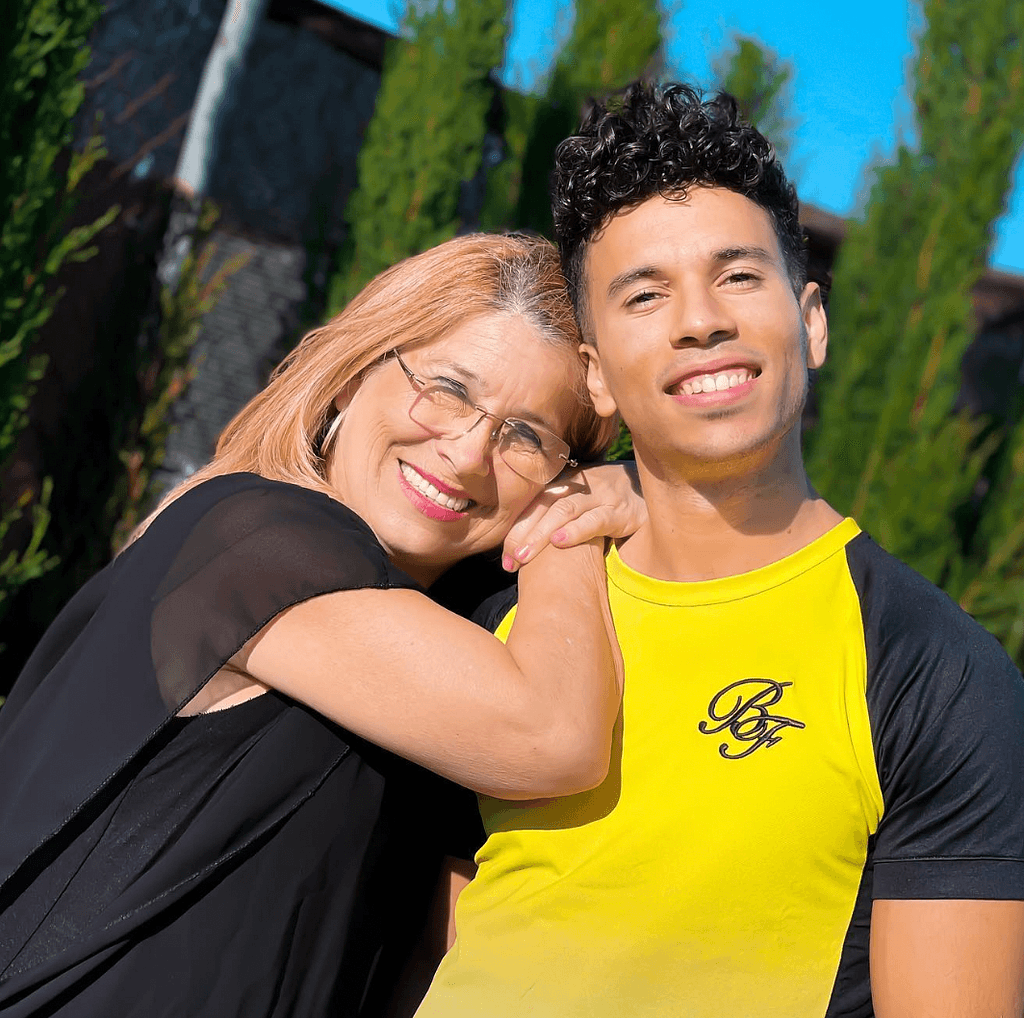
Southern Spain is a very Spanish region, in art and music as well. It's where the wonderful flamenco lives. People think flamenco belongs to all of Spain, but the place where flamenco is truly alive is that southern region.
As an Andalusian, my mom adored flamenco. Andalusia and Colombia — two very strong cultures overlapped inside me.
My father danced salsa. A salsero to the bone. I was exposed to all kinds of Latin music, but salsa especially, intensely. Merengue included. My younger sister loved bachata. She loved Juan Luis Guerra. Me, I really, really listened to a lot of merengue.
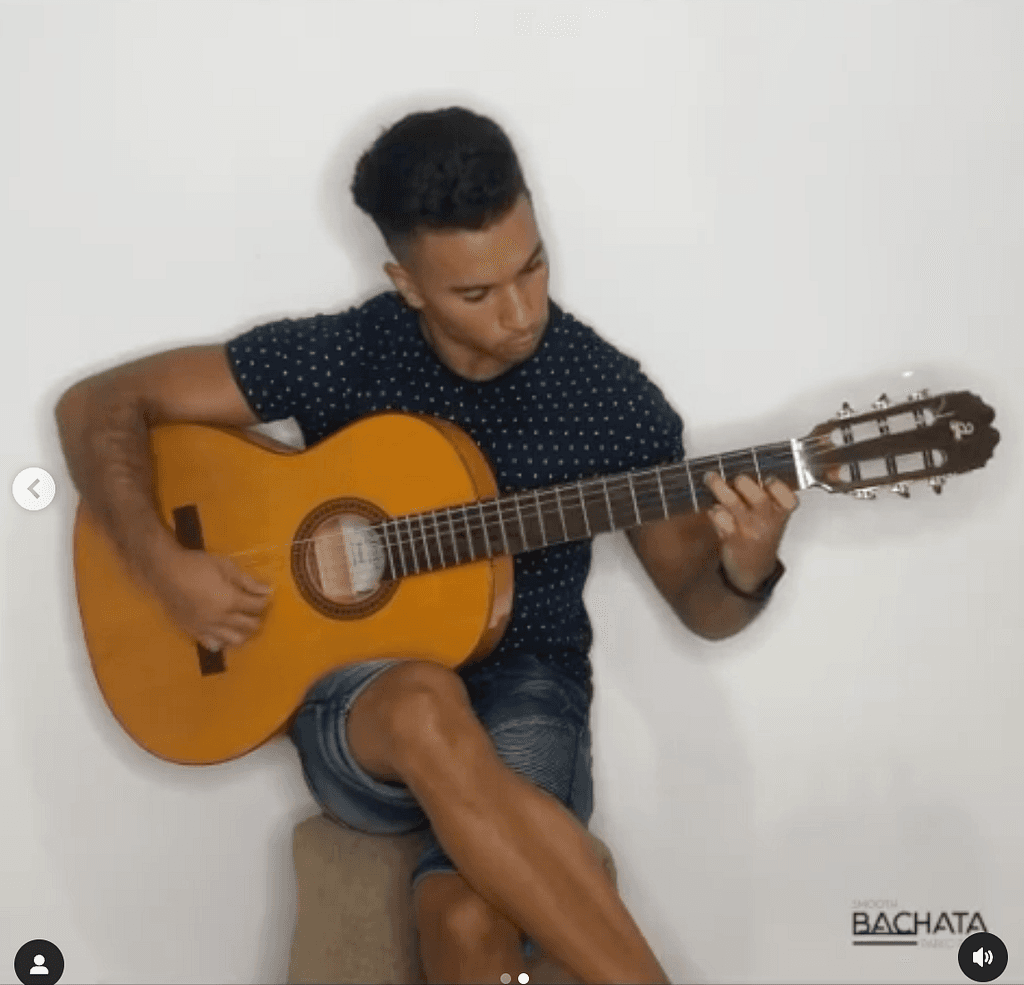
I also played flamenco guitar. I studied music at a conservatory for years. Classical music. But when I finished middle school and moved on to high school, I couldn't attend the conservatory anymore, so I enrolled in a music school. I was deeply drawn to flamenco guitar. I still really, really love flamenco music and listen to it a lot.
(Now I know how Pablo could deliver such deep music theory!)
Q. What kind of student was Pablo?
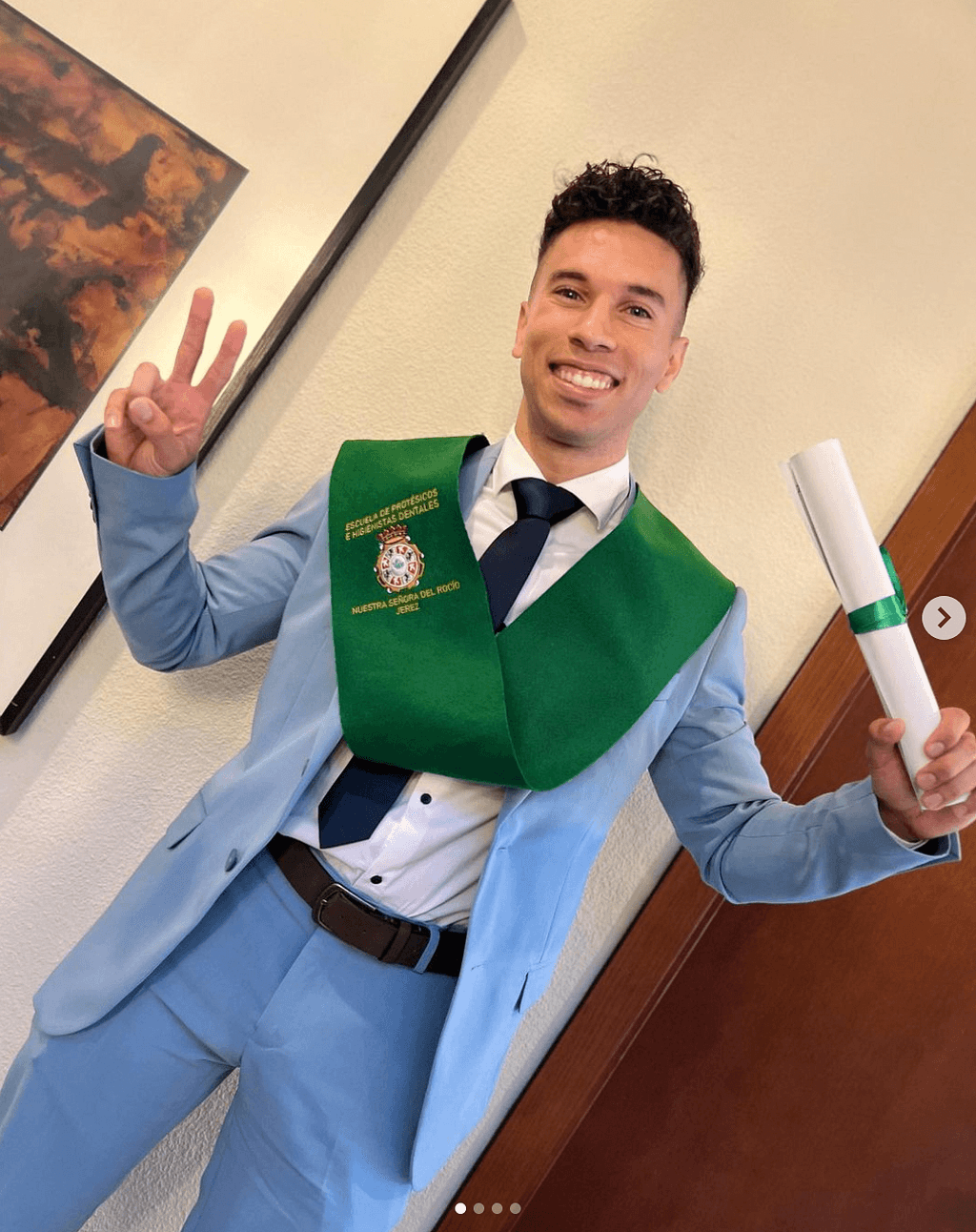
I always did well in school. Really well, actually. Recently I completed the senior technician program in dental prosthetics. These past few years, juggling dance and studies was so hard. But I graduated with honors — a perfect 10 in every subject except one where I got a 9. I'm very proud of that.
Q. What did you major in at university?
Health Science. Actually, I was planning to continue into medicine. My father is a doctor, and like him, I've always believed I should help people. I always wanted to devote my life to helping people. I even carried medical supplies around to help people in emergencies.
(A doctor father who wants to help people and loves salsa to the bone… Pablo's dad's specs feel slightly unreal;)
Q. When did you start dancing?
At 16 I started taking salsa and bachata classes. As a kid I danced traditional Colombian dances. Like cumbia…
Spanish and Latin American cultures were very different. In Spain, the main event at a party is the food. Food is the center of everyone's attention, and there's a lot of chatting. But in Colombia, music and dance are the main event. Go to a birthday party and merengue, salsa, and bachata play nonstop. You absorb this culture naturally from childhood. By age 6 or 7 you're dancing with your cousins, your big sister, your friends — even if you don't particularly want to. Dance is the heart of Latin culture.
Q. What's Spanish culture like?
Spanish culture centers a bit more on eating. In Colombia, the center is dance and love.
Q. So you started dance classes at 16 already carrying the foundation you'd built in Colombia.
I always loved dancing. But I came from Colombia to Spain at 7, so young that I never had a moment to think, I want to formally study dance. Studying, playing basketball… I'm very short, but I played basketball for quite a long time and I was good. Lots of other sports too.
Then I met friends who danced. I already knew how to dance, but as a Latino, I had never counted one-two-three… I just danced to the rhythm. But since my Spanish friends were taking classes, I figured, okay, let's give it a try. At first I wanted to learn salsa and didn't want to learn bachata. I told my friends: I know how to dance, but I don't know patterns or anything like that.
Then, by chance, I met a teacher named Korke. Suddenly this teacher had me doing waves, doing golpes (staccato) to the music… I asked, isn't this choreography? But he said no. He said this was a technique you could lead and follow. Suddenly I loved bachata. So I quit salsa and started learning bachata from Korke. That was the summer of 2009.
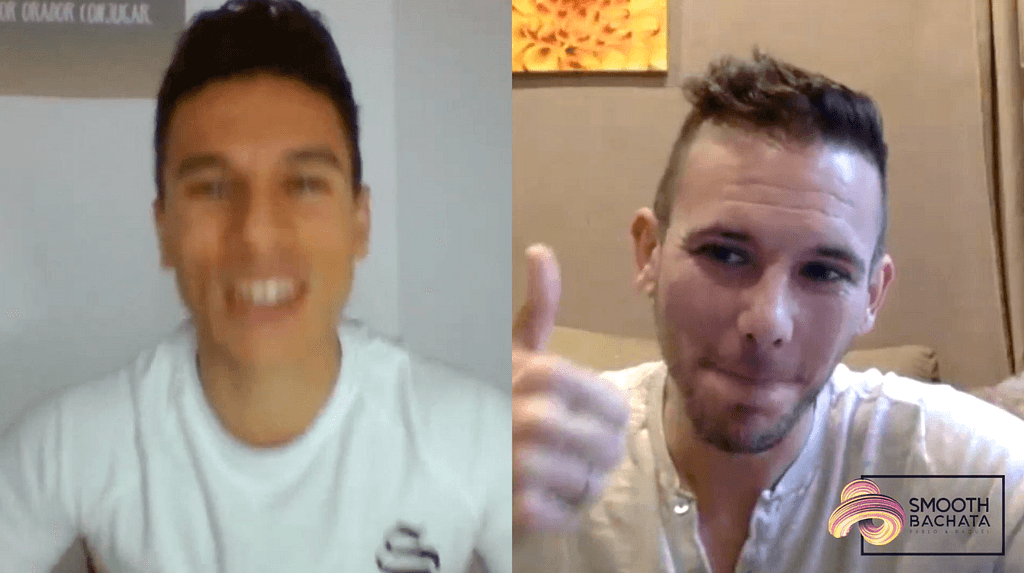
Q. So you started bachata because you loved Korke. There was a prejudice that Latino teachers dance better and are the better choice — did that ever cross your mind?
People always say that. But I thought it didn't matter. In the end, talent shows up anywhere in the world.
Of course, any level of dance or any genre of music is much easier to do in the place where it was born. Because you're exposed to it from birth. Same with flamenco — people born in Spain will find it far easier than people from other countries.
But these days Japanese people dance flamenco, and when you watch them play flamenco guitar you go, wow, that's insane. In the end, talent belongs to the person who has it. Though of course, if you live where that culture was made, your chances are much greater.
Take me: I was born in Latin America, and I'm closer to Latin culture than Spanish. I grew up soaked in the Latin feeling from childhood. But do I dance better because I was born in Latin America? I don't think so. It has nothing to do with that.
Q. So that's when you took Korke's classes?
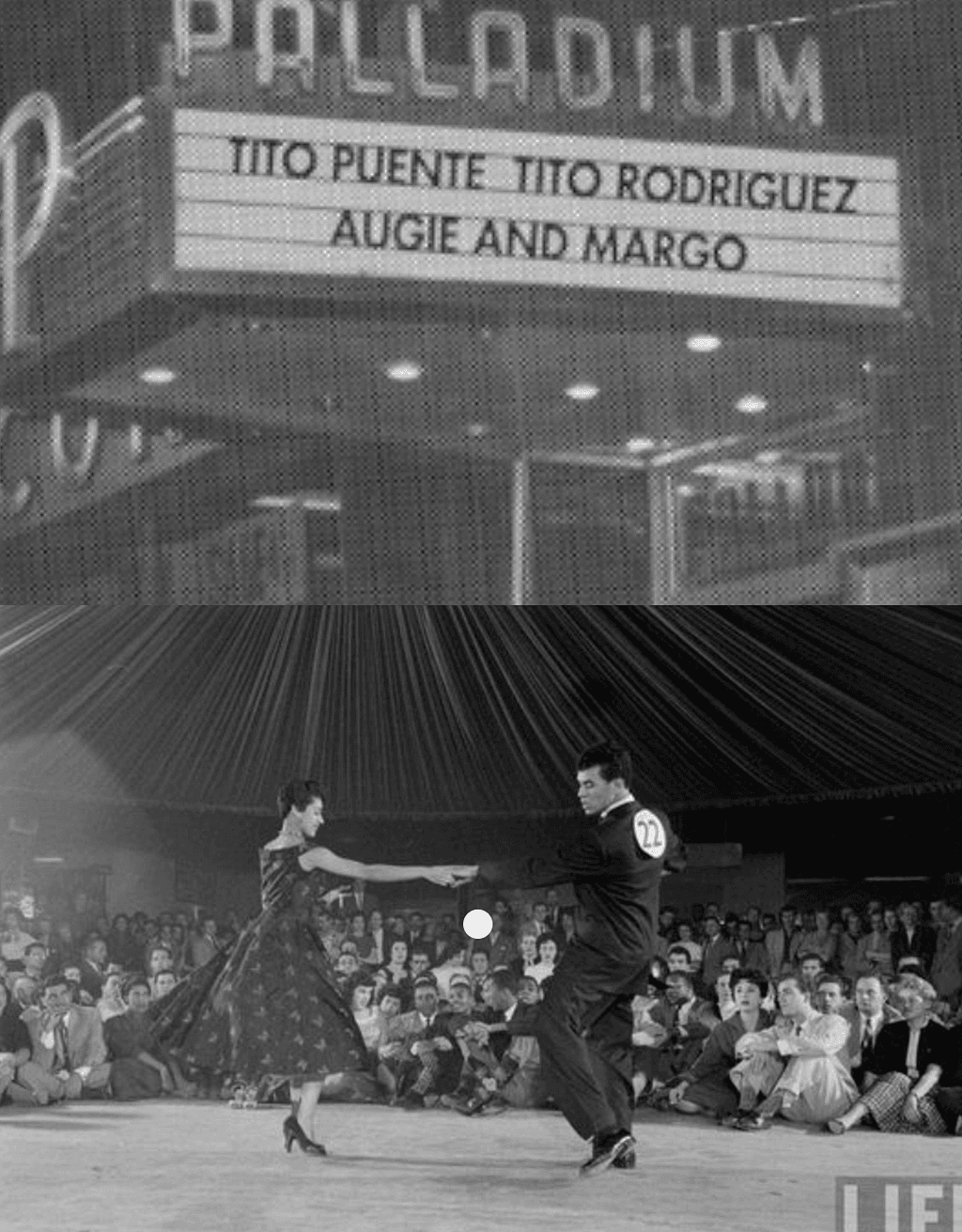
Bachata sensual is like mambo in its golden age. A boom rose up at the Palladium, the temple of mambo, along with Eddie Torres' themes; exiles from Cuba poured in, and many people started making salsa music.
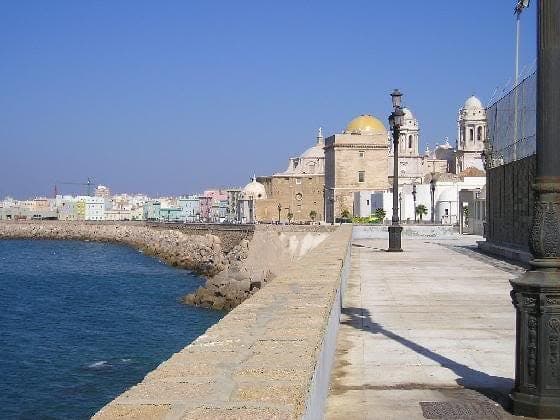
In the same way, many of Korke's people flocked to the Malecón (a beach in Cádiz that resembles Cuba's Malecón). A boom rose up, and in that era, nobody could resist bachata.
Q. Why is Korke called the creator of bachata sensual?
It was when YouTube was just starting, and people began copying bachata from YouTube videos. There was a guy living in Argentina who said he'd already seen Korke — without ever having set foot in Europe. (skipping a chunk)
When Korke taught, at first there wasn't even a name for it, and nobody thought Korke had created something. Lots of people just came and learned, and everyone thought of it as simply Korke's style.
Then Tony, a famous promoter from London, came to find Korke and told him: this is your bachata, and it's going to be called bachata sensual. That's how it started. Korke-style bachata became bachata sensual.
Q. How long did you learn from Korke, and when did you start out on your own?
Fun story. Once I started dancing, I was good. (It's long, so to sum up briefly…) Korke always said I worked hard and executed exactly what I was taught. That's because, whatever I did at home, I'd been raised with that kind of systematic education from the start. My parents gave me a really good education.
So I moved through every stage fast. And then one day, a few years in, Korke said he had nothing more to teach me. I was still hungry — I wanted to know more. Korke advised me to find a partner I could perform with, and to find my own style. I had always danced traditional bachata. So I thought, fine, let's dig deep into traditional.
But in Cádiz, everyone only did ondas (waves) and the sensual-style basic — the style called bachata sensual. Nobody cared about a basic focused more on footwork. So I decided to find my own style, and that's when I stopped taking classes and started developing a style of my own. Silvia was my partner (the Silvia of Chaves y Silvia) — all ancient history now. I also partnered with Judith for a year, taking classes together. Wonderful times.
Q. Bachata sensual vs. bachata traditional — which does Pablo like more?
Bachata traditional. (The end~)
Of course, what many people, many students want is sensual. I dance sensual far more, too. Because that's what people want from me. And that matters. But inside, I'm filled with the sensibility of traditional bachata.
Today's bachata is much more melody-centered than the old traditional. But even so, inside it there are still the four main instruments, and at their heart, the bongó. Bachata was born from the bongó. And we still dance to that instrument today. So dancing modern or sensual together with traditional lets you bring out the musicality better. (→ translation not certain)
Q. What are the four instruments that can't be missing from anything called bachata?
My methodology is BBGG (be-be-ge-ge in Spanish). Bongó (Bongo), bass (Bass guitar), güira (Guira), and guitar (Guitarra — the requinto). A long time ago I developed a musicality teaching methodology that anyone can understand. For me, these four instruments are indispensable to the bachata sound.
Q. When did you find your competition partner? I hear you love competitions.
My first partner was Deborah. She was my girlfriend. Then in 2011 I started working with a dance partner. That was my third year after starting with Korke in 2009. From then on I began teaching and entering amateur competitions held at resort-type places, introducing ourselves. And in 2011 we reached the finals of a competition called Bachata Arte — that was my first official experience.
Q. When did you start entering professional competitions?
Working with a partner was hard. I wasn't ready to give everything to dance yet. I danced with my girlfriend Deborah for about a year, and after that with Laura, whom I met in class. And at Bachata Arte 2012 we won my first national championship. That opportunity made me known and let me get my name out there. Digital marketing is everywhere now, but back then nothing like that existed, so getting known was hard. The show was what mattered — your show had to get known for festivals to invite you. It was tough.
Q. Which is more important to you now — shows or classes?
I think it depends on what a dancer truly focuses on and values. In my case, both are worth 200%. I give everything to being on stage, but I can't let an injury there stop me from doing everything else. That's why I don't do overly dangerous acrobatics. When I travel, at home or abroad, the classes that 'educate' people are very important. And for the people who come to my classes, too.
The end goal I have in mind is to pass on patterns while transmitting the many techniques embedded inside them. How to move, how to do the basic, how to connect with your partner, and so on. And last of all, I try to teach musicality.
It's not just about dancing and doing shows. When I walk into a class, I don't think about how cool my demo or my patterns will look. Because the thing that amazed me about Korke's teaching was that people who share the same technique can dance with a complete stranger in a completely different country. That is social dance. In my classes too, rather than impressive-looking patterns, I try to transmit the essence of the dance inside them — something you can use with anyone at a social.
Q. Among social techniques — how do you do a cambré without hurting your partner's back?
Everyone has their own method, but for me, the most important thing is prior preparation. You can't suddenly bend the follower's back like, surprise — cambré time! That's the most important thing.
And the biggest hallmark of the Pablo y Raquel style is fluid movement. That flow, that suppleness, is the most important base — and it comes from the breath. When you're in contact with the follower and you lift your breath, her weight disappears. Everything comes from that breath, that preparation. And then you prepare the spine. Everything starts from below the hips (the lower body), and that energy travels up the spine and becomes the move.
In other words, you invite the follower into the move — and the invitation happens through the empty space created by the preparation. Then she fills that space and completes the final move.
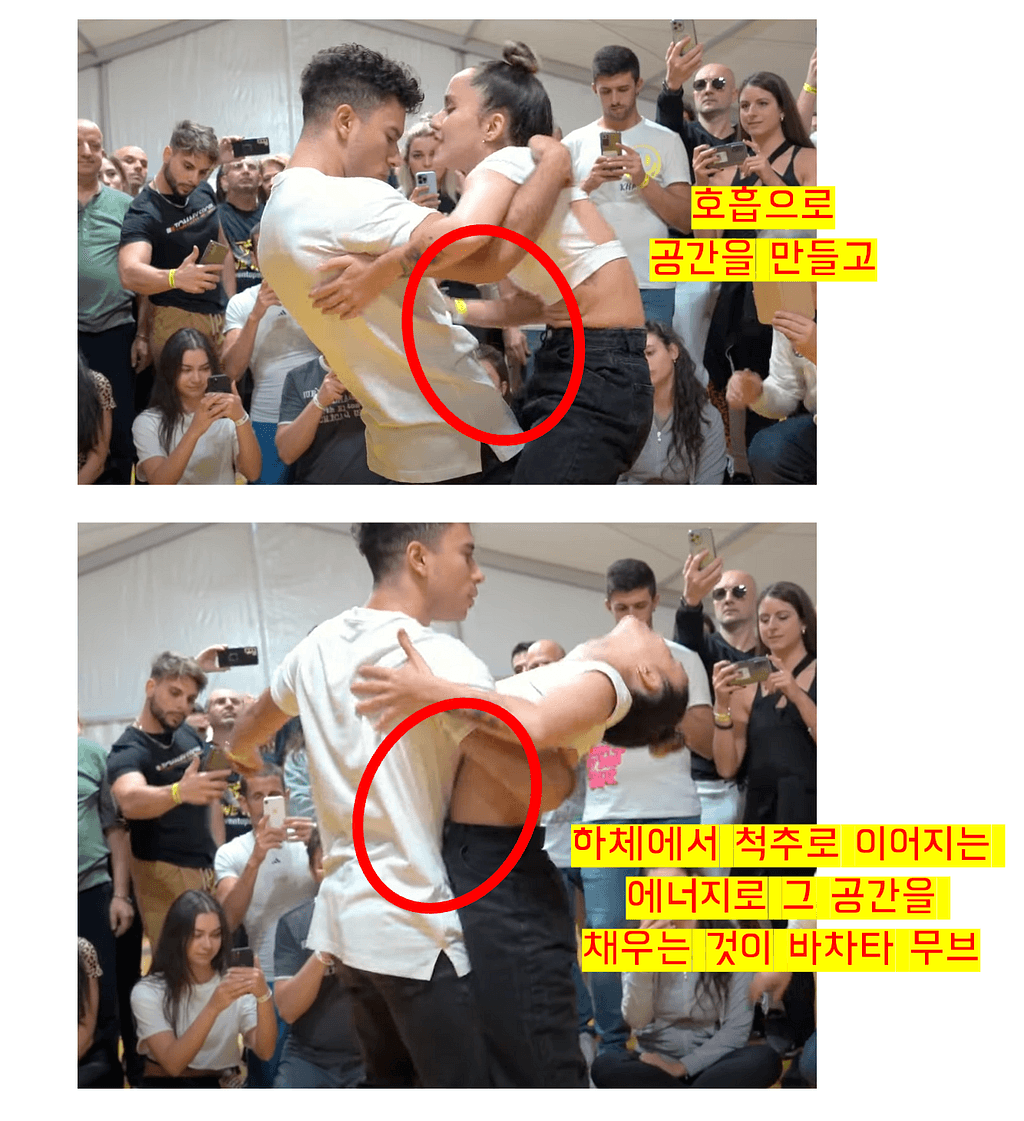
But on social media, you often see it not done this way. (On the cambré) it's just WHAM~ suddenly dropping her down.
Q. How did you meet Raquel?
In 2012 I won Bachata Arte with Laura, and we got invited to lots of places, so I had chances to travel. I was 18, 19 back then. And in 2013 I got to enter the first Bachatea, where Marco introduced me to Raquel.
Q. Bachatea 2013 — that's the year Daniel y Desirée won, right?
That's right.
Q. Who were the top dancers you looked to back then?
In terms of competitions at the time, it was Ronald y Alba and Alfredo y Andrea. They'd been competing for a few years before I started and were already at a high level. I had to give my best to compete with them. But what they did wasn't my biggest inspiration. In the end, at a competition you have to do it your way. Developing your own style is what matters most. You can't dance like somebody else.
Q. How did Marco introduce Raquel? Like, "here's an amazing woman who can really dance!"?
They were both from Salamanca and had been friends for a long time — that's why he introduced us. I liked Raquel. She danced both salsa and bachata well. Plus, she was short! (laughs)
I had a dance partner, so I never imagined Raquel would become mine. But when Laura and I parted ways, she flashed — pop! — into my head. What was her name again? I had to call Marco just to ask her name. I couldn't even remember it. I got her number, reached out, and went to an event in Salamanca where she was. I met Raquel again there. We danced together, and her dancing was a bit different because of her ballet base. Not knocking ballet — ballet and bachata are just completely different dances. But her sense of the body's space, her body control, was on a completely different level from someone who'd learned bachata purely as a social dancer.
Q. Does someone trained in ballet have a big advantage over someone who learned bachata just through social dancing?
The way I felt it, with Raquel I could do the choreographies I'd been dreaming of until then. I'm a very creative person when it comes to choreography. If she can split her legs that far — what could I do with that? Before, a partner's physical condition put a lot of constraints on my choreography. So when Raquel came along, it felt like being gifted a Ferrari. With Raquel, I felt I could try everything, with no limits at all.
So I immediately proposed we partner up and split all income 50:50. I was really lucky. Raquel shared the same vision of dance as me, and we've walked the same road for over ten years. Pablo y Raquel have always walked the same path, always sought out new things, always hand in hand. For dance partners this is crucial. Dancing well matters, but having a partner who shares the same philosophy and can focus on the same goal is enormously important. In any business.
Q. Do you feel fear when you step on stage?
No. No fear. Never have. I hold enormous respect for the stage. I've never gone on stage without conviction. I'm going to blow this stage up and people are going to love it. They're going to see how well I dance, how well-prepared the choreography is. That's what I believe. Because if I don't believe it, the people in front of me won't believe it either.
And the philosophy Raquel and I always share is: in every show, surpass ourselves. Or at the very least, deliver the level we've always upheld. People enjoy our shows. That, and our respect for the stage, is what drives us.
Q. How did your career unfold with Raquel?
With Raquel I reached the final round of Bachata Stars, won in Salamanca, and competed against Marco y Sara in Mallorca. We became champions for the first time in 2014. (Etc. — stories from the era of meeting and competing against Marco y Sara, Sergio y Ana, Alfredo y Andrea, and Luis with various partners across many competitions…) He said that since he and Raquel started late, they trained incredibly hard to compete.
Q. What advice would you give people preparing for competitions?
Competitions are a time for rehearsal and experience. That's how we won so many of them. At many competitions we placed 2nd or 3rd, but we always listened to the feedback on our dancing and looked back at ourselves. That's the most important thing.
These days, when I'm invited as a judge, dancers come up and ask questions. Often it's not for feedback on their dancing but about why someone else scored higher than them. I tell them: look at yourself and ask what went wrong. Because that's how you improve yourself, instead of comparing yourself to others. Look inside yourself, and if an answer comes out of it, it will surely make you grow.
Q. Do you think the new generation of bachata dancers will surpass the older generation?
Fun question. It's a topic I talk about a lot with Raquel, and with other colleagues too.
Social media lets you reach so many people and show the world what you do and what talent you have. But it can also become a tool that keeps you conforming — staying in the safe comfort zone of what shows up on video. That way of working isn't for me. I constantly tell myself: push yourself harder, show a better show, or people will stop calling you. The likes-and-views game between dancers and organizers creates a bad circle.
When organizers book a new couple, it should be because they put on a great show and teach brilliantly — not because they have more followers or likes on social media than other dancers. Organizers should give opportunities to the people who deserve to be known.
I hate to say this, but I don't see the new generation of dancers surpassing the established ones. Because I don't see anything original. I don't see dancers with the kind of personality where you can watch the dancing alone and go, 'ah, that's Pablo y Raquel, that's Marco y Sara, that's Korke y Judith.' When I watch today's dancers, all I see are copies. The result of mixing this and that from what already exists. Mixing Ataca y La Alemana with Daniel y Desirée, or Daniel y Desirée with Pablo y Raquel. Mixing this and that into a cool video is easy. We used to spend five, six hours practicing and rehearsing in the studio. Now it's five, six hours of video editing.
If anyone, to me Andres y Jessica seem like a couple with the quality to compete with the established generation in competitions, classes, and so on.
Q. Which dancers are underrated relative to their skill and hard work?
It's hard to say, since I don't know how hard everyone works. But among the people I know, there's one couple I deeply respect. The level of their shows and the level of their teaching in workshops are both outstanding. Sergio y Ana.
These days social networks are treated as hugely important. But they don't pay much attention to that stuff. Honestly, apart from Marco y Sara and Daniel y Desirée, the established generation is completely lost at sea on social media. They upload, but they don't care that much. It matters, of course — but it can't be the center of your life.
Sergio y Ana are sincerely devoted to what they do. And they put in so much work. But in many of the places I've traveled, they're still not well known. Yet they are a truly spectacular couple. When it comes to shows, I respect Sergio enormously. I watch and think: what gorgeous dancing, what a brilliant dancer. I believe they deserve to be far more known and far more booked.
Q. Besides bachata and salsa, are there other dances you train in?
After moving to Madrid, Raquel and I started taking jazz classes. And I've tried some contemporary too. Raquel doesn't take bachata classes anymore — there isn't much for her to learn in a regular class. So I share what I know about bachata with her, and she, as a ballet dancer, corrects my bachata technique. Things like precise posture and how to use your legs in a show. It's lucky to have found a partner who has exactly what you lack.
Raquel still takes ballet classes, and I do urban and contemporary. We share what we each learn. But in the end, what matters is taking all of it and grafting it onto the bachata I've always done. I lead, but when I'm not leading, I can dance too (shines). With urban dance, I use it when that freedom opens up. Urban gives you the freedom to try more original things. I already know how to do waves in bachata, but waves in urban dance are a bit different. You graft things like that on and try something new.
Q. Do you think Pablo's style, Pablo's mindset, is one of the hardest-earned results in today's bachata scene?
What I always tell myself is: keep developing the subject further, keep training multiple styles nonstop. I really do work hard. And I keep on learning.
I will be a student forever and ever.
If someone comes to me and shows me something new that I can't do, I will learn it and pull it off, whatever it takes. And I'll keep up the daily training I have to do.
Q. Last question. Today, at this very moment — who is your favorite bachata dancer?
It's hard to say because I love different elements of different dancers. But if I had to pick one person, it's Sergio. His style is the closest to mine.
So — a dancer with the brains, the brawn, and the artistry all in one. Don't you think you have to meet him at least once?! And it's happening SOON!!