
 My Honey Jar

Soonara
수나라


Latest first5 videos

(BachaZouk) Toallá helps your bachata too~ Here's what it actually means and how the movement works! Su & Nari Sunday BachaZouk class

(Bachazouk) The One Thing That Makes Those Explosive Zouk Moments~ What Is a Scoop Turn? Soo & Nara @ Zouk Night LATIN
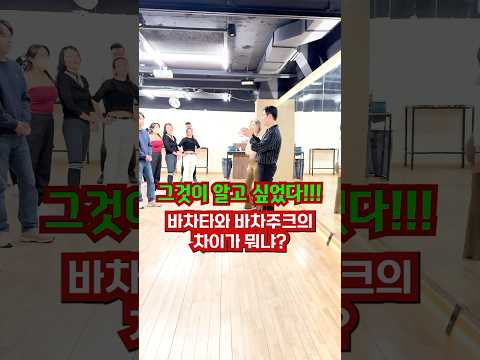
(Bachazouk) We've Been Dying to Know!!! How Is Bachazouk Different from Bachata? Soo & Nara Lay Out 2 Formulas @ Zouk Night LATIN

(BachaZouk Intermediate Class) Flip turn into prep — the multi-move combo — Sunara open class, LATIN #Bachata

(BachaZouk Beginner Class) Preps for the bachata→zouk switch + the BachaZouk pattern everybody knows — Sunara open class, LATIN




 Collecting these slowly, one at a timeThey get better every rewatch
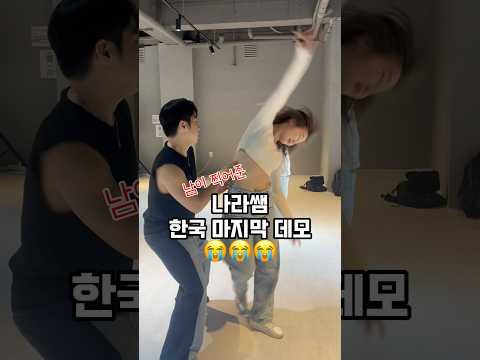
(BachaZouk) Came to Korea at 18, leaving at 28 — Nari's decision😭👏 Su & Nari Sunday BachaZouk class #bachata

(BachaZouk) The demo that gave me chills mid-filming — Kyungsu & Nara BachaZouk open class, LATIN
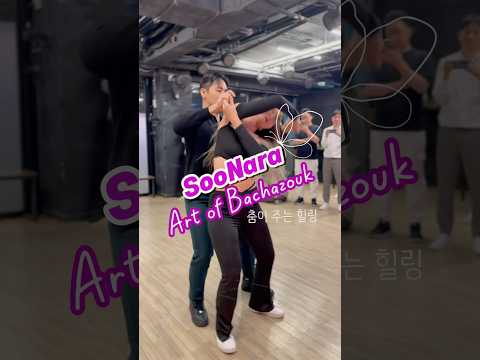
(BachaZouk) Pure healing vibes — Kyungsoo & Nara open class LATIN #BachaZouk #Bachata


“The point isn't to hold the head — the chest goes first and the head follows. Push the chest first, and the head has to drop.”
Walking through head rolls, tilt turns and other head movements, then pinning down the principle they all share
Watch that moment →“When the lead is holding you in a sensual grip, the follow should feel like they need to release the tension in their elbow.”
Explaining what the follow should feel in a sensual grip
Watch that moment →“With the chest open, when the follower's resistance and the leader's pull hold the exact same tension — if the twist doesn't release, the chest won't close; if it does, you get the twist.”
Explaining how lead-follow tension decides whether an open chest turns into a twist or closes
Watch that moment →“For the sensual grip, you use just two points — your thumb and your middle finger — and press up and down.”
Demonstrating the principle behind the two-point sensual grip
Watch that moment →“Even if you let the tension out of your hands, as long as you're staying connected to the body, the follower is way less likely to get hurt.”
Explaining how to keep contact so the follower stays safe while leading into a head roll
Watch that moment →“If you split the beat up fine and connect the end of one move to the start of the next organically, you can fit three moves inside eight counts.”
Aitor breaking down his beat-splitting technique
Watch that moment →“Whether you use the back of your hand or your palm completely changes how the lead works. Palm to palm, even a little pressure gives you a solid pull; back of hand to back of hand, it's actually easier to push.”
Sharing a personal tip on how the grip — which side of the hand you use — changes the lead
Watch that moment →“To get organic movement out of beats this short, you have to blend everything — the hand connection, the hip connection, the energy, the breathing — so it works even when the follower's level isn't that high.”
Aitor explains the approach he worked out to build beat-splitting moves that land even with beginner followers
Watch that moment →“No prep, no move. If you want to do BachaZouk, you have to start from the prep — always.”
Emphasized while teaching the transition from bachata position into the BachaZouk signature prep
Watch that moment →“Whatever sequence you use, on the basic you use a down basic over four counts to build one musical block. When you're building a sequence in bachazouk, you have to do your interpretation and build the sequence inside those four counts.”
Introducing the four-count musical block formula while explaining what separates bachazouk from bachata.
Watch that moment →“Basic one is just a pretty basic. From the second count you start building the move. Around the third count you start making it zouky with the frame and your breath, and with the fourth count left you explode into the sequence and finish it.”
A step-by-step breakdown of how the sequence stacks up, count by count, inside the four counts.
Watch that moment →“When you do a scoop turn, think of the lady's turn axis as being laid down on its side.”
Describing the tilted axis concretely, as a trajectory laid on its side
Watch that moment →“But in bachazouk, you start tilting the axis. The axis isn't perpendicular to the floor anymore.”
Explaining the axis concept of the bachazouk scoop turn, in contrast to a normal turn in place with a vertical axis
Watch that moment →“You find the meeting point between the two moves and just link them up. The preparation for the head move and the preparation for the filter — the flip turn — are the exact same thing.”
Explaining the core principle of the multi-move that links a head roll into a flip turn after the heel turn
Watch that moment →“The follow has to resist. Just because the guy pulls doesn't mean you go along with it. You have to keep the tension by pulling the opposite way.”
Explaining how the follow creates tension by resisting the lead's pull in the signature pattern
Watch that moment →“In zouk, apart from certain situations, dancing parallel to the ground is the baseline, and the wave creates the head's base through traveling — bachata, on the other hand, uses up-down the whole time and is danced on the spot a lot of the time.”
Contrasting how zouk and bachata use the body — traveling waves versus up-down on the spot.
Watch that moment →“You built the move on the spot, so you've got no momentum, right? That's why you have to use your frame to open the follower's elbow outward. So we need to be able to create the preparation even without momentum.”
Explaining that bachata has no traveling momentum, so the head-move prep has to come from the frame instead
Watch that moment →“The leader has two ways to do it. One, drop the frame and then lift it. Two, kill the speed and then bring it back fast. When the frame changes, the head releases.”
Explaining the leader's two ways of releasing the follower's head in the tour de tête
Watch that moment →“The lead gets the left hand ready, then lightly hooks the follow's hand that's resting on her waist — the energy closes the frame, and you naturally end up in a great position to go into the head.”
Explaining how to hook the hand to close the frame and transition into a head roll
Watch that moment →“When you turn on an axis, the axis doesn't have to be somewhere in mid-air. You can use a part of your body — your elbow, say — to make the turn more fun.”
Explaining the idea of the axis in a scoop turn and demoing how to lead it off the elbow
Watch that moment →“Once you're dancing bachata (zouk), you have to start tilting your axis. Your axis isn't perpendicular to the ground anymore.”
Introducing the concept of a tilted rotation axis while explaining the scoop turn
Watch that moment →“The biggest difference between the hip and the polido comes down to one thing: the spiral.”
Defining the core difference between the two movements — the Lasaman hip and the polido
Watch that moment →“When you do the small hip, you keep the bend and roll your hips only inside your shoulder frame.”
Explaining in detail how to execute the small hip roll (Lasaman hip)
Watch that moment →“When you're doing the weight shift and the legs together through your frame, you should be able to do it even without hands, everyone.”
Emphasizing the principle that you should be able to complete a movement on your own center, without a partner's hand for support
Watch that moment →A word about Soonara? No login.