 My Honey Jar
Latest first6 videos

(BachaZouk) Counterbalance vs promenade — the difference, crystal clear! Masajose & Polina @ Thailand Latin Extravaganza #bachata (filmed by Winnie PD)

(BachaZouk) Counterbalance: the core concept unpacked through force dynamics - Masajose & Polina @ TLE Bangkok #bachata (filmed by Winnie PD)
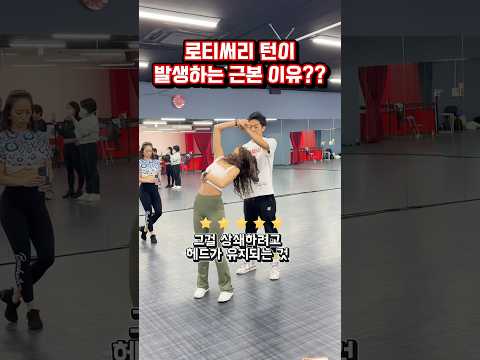
(BachaZouk) The head roll that never ends 🔗 the core principle behind every zouk move, cracked by Masa & Jose — Japan Sensual Festival 22

[Bachata Beginner Class] THE Marco & Sara - the bachata sensual formula M x L x P: what is sensual actually made of?

Open Class, GOAT-Tier Build-Up~ Masa Jose unpacks 6 whole pretzel-position variations out of cabeza (head roll) fundamentals… that Spanish flavor, all over the place….

Turning easy, precise basics into advanced technique — Pinza | Cabeza | Lanzamiento de la Cadera




 Collecting these slowly, one at a timeThey get better every rewatch

(Bachazouk) Masha & Polina's Europe-conquering, next-level technique 🥳 K-Sensual by Wongung & Yoni
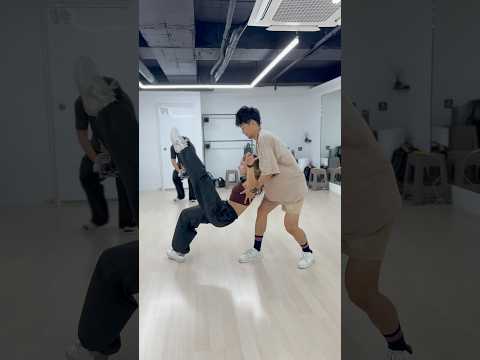
(BachaZouk) Straight out of my Instagram feed🔥 my first Marcia & Polina demo~ K-Sensual by Wongung & Yoni


“If you use your arms a lot, you can never be 'creative.'”
Closing the class with the point that creative movement comes from leading with the body
Watch that moment →“The biggest difference between bachata and bachata sensual is that in sensual there's always a two-beat prep.”
Teaching pinza and cabeza, laying out the structural difference between traditional and sensual bachata
Watch that moment →“The whole point of the frame is that you don't use your arms like this. Do you know why this bag is moving right now? Because I moved my body. Not because I used my arms.”
Demonstrating frame leading with a bag to show that you lead with the body, not the arms
Watch that moment →“Counterbalance is a concept where opposing energies stand out. If I go up, she goes down.”
Defining counterbalance as energy running in opposite directions between leader and follower
Watch that moment →“You don't need to memorize a set routine. I'm just connecting a few basic moves, that's all.”
Explaining his own approach after showing a combination linking pinza–cabeza–lanzamiento
Watch that moment →“Whenever the direction of a movement changes, there's always a moment of "bounce."”
Breaking the onda lateral down to its smallest units to explain the bounce that happens at every change of direction
Watch that moment →“Pinza and cabeza both create the same chest-in on the prep, so I take the chest-in I've already made in the middle of the pinza and carry it straight over as the prep for the cabeza.”
Explaining how to switch from pinza into cabeza using the chest-in the two moves share as prep
Watch that moment →“It doesn't matter if the direction I'm walking changes, or if the direction she's walking changes. The hip is right here, so the head roll gets offset — and that's why the head always stays in the same place.”
Explaining why the partner's head position holds even when the leader's walking direction changes in a head roll move
Watch that moment →“My main lead is my chest. For the secondary lead I use my wrist, not my hand.”
The part explaining which body parts the leader uses to lead a head roll.
Watch that moment →“People call the head roll a passive movement, where the chest moves the head, but this is a move the leader drives actively. So the head is moving passively.”
The part explaining the difference between an active head movement and a passive head roll.
Watch that moment →“The frame — you move it with your chest.”
Demoing body contact against frame leading side by side to explain the core principle of the frame.
Watch that moment →“Once her weight has already shifted from right to left, it's too late. While her weight is still on her right leg, you open the chest and go straight into the cabeza.”
Stressing how precise the lead's timing has to be going from pinza into cabeza
Watch that moment →“In the pinza I shift my weight to the opposite side from hers for counterbalance, and I use that force to open her chest and finish the cabeza.”
Explaining the leader's counterbalance weight shift when linking pinza into cabeza
Watch that moment →“When you do the lanzamiento de la cadera, keep your weight on both legs and let only the hips draw the circle. Chest stays up the whole time — don't drop it, don't push the hips back.”
Breaking down how to execute lanzamiento de la cadera properly, upper body included
Watch that moment →“Take the hip-in motion that happens in the middle of the cabeza and use it as the prep for the lanzamiento de la cadera — that's how you fuse the two techniques into one.”
Explaining how to cut the cabeza halfway instead of finishing it, and link straight into the lanzamiento
Watch that moment →“Losing balance means we both lose our balance together, because of that energy.”
Explaining how leader and follower lose balance at the same time in a counterbalance
Watch that moment →“There are three ways to lead the frame.”
Opening line as he sorts leading into three kinds — body contact, frame, and vision
Watch that moment →“You can't lead with this much force. The follower has to be super light — like a feather.”
Explaining the Barcelona-style 'feather' lead, stressing that you have to take the force out
Watch that moment →“When she lets go of her arm, if it drops like this, your frame is way too heavy. If it floats up like this, it's too light. When it's just right — that feels great.”
Walking through the drill for checking the right weight in your frame by watching the follower's arm
Watch that moment →“If you lead with both arms, the dance gets boring.”
Explaining how leading with a one-arm frame frees up the other arm for styling
Watch that moment →“This way of leading is underrated, but for me it's really important.”
Right before introducing the third leading method — vision (eye contact) leading
Watch that moment →“A guy's leading is never complete unless he uses this — vision leading.”
Stressing how crucial vision (eye contact) leading is, and nicknaming it 'wifi'
Watch that moment →“Any move at all can be led with these three things — body contact, frame, and vision.”
Leading two followers at once in a bachatrio while tying all three leading concepts together
Watch that moment →A word about Masa y Polina? No login.