 My Honey Jar

Latest first5 videos

(Bachata) New-gen flavored combos from the Edward & Maria masterclass ❣️ Korea Sensual Week by Vasion & Gatshoney

(Bachata) Edward & Maria masterclass — killer intro & workshop combination ❣️ Korea Sensual Week by Vasion & Gatsuhoney
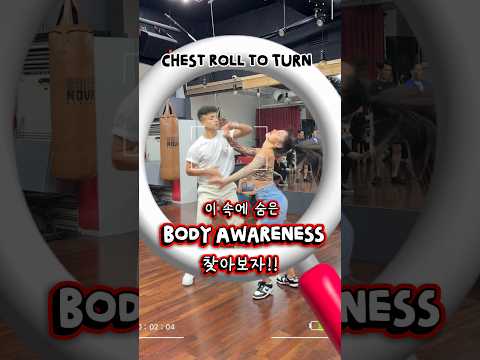
(Bachata) Feel every single part of your body and finish the movement~ Edward & Maria 2024 workshop - K-Sensual Week by Gatsu & Honey #bodyawareness

(Bachata) "Hear each sound separately and let the musicality breathe~" instrument-by-instrument musicality with Edward & Maria — K-Sensual Week by Gatch & Honey

(Bachata) The unexpected gold nugget from the Edward & Maria workshop! feat. Gatz & Honey




 Collecting these slowly, one at a timeThey get better every rewatch

(Bachata) Edward & Maria bootcamp pt2

(Bachata) Edward & Maria bootcamp pt1

(Bachata) Ladies who go invincible for love — superhero mode! Edward & Maria ladies bootcamp highlights❣️ Korea Sensual Week by Vasion Gatzhoney
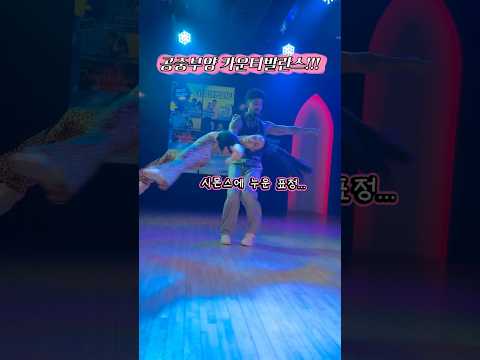
(Bachata) Counterbalance levitation into head-roll variations~ hot-sauce bachata: Edward & Maria's first demo of 2025! Korea Sensual Week by Vasion & Gatshoney

(Bachata) Straight out of your Instagram feed 💛 Edward & Maria's first demo of their week-long Korea tour! Korea Sensual Week by Vasion & Gatshoney
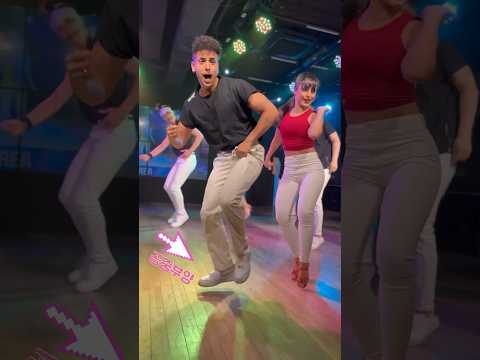
(Bachata) Basics glued to the floor, movement thick and chewy ❤️ Edward & Maria bootcamp

(Bachata) If there were a Ladies Olympics, y'all are taking 🥇GOLD🥇 Maria bootcamp w/ Nara


“The only information she gets is that her arm is touching my body. That's how I can lead with my body.”
Explaining how body movement is led through arm contact in L position
Watch that moment →“If there's no tension here and I'm the one trying to find your tension, I can move, but she won't understand at all what I'm trying to do.”
Explaining how the lead fails to travel when there's no tension at the contact point
Watch that moment →“The spiral structure is the most important thing.”
Stressing the importance of the spiral structure while explaining the move that frees up the upper body (espiral)
Watch that moment →“Before you move your arms, you always have to change and tilt your body first.”
Explaining the principle that torso movement comes before the arms in leading
Watch that moment →“If you want to do something with the hips, try to find the hip contact.”
Introducing a separate contact point for leading hip movement, beyond arm contact
Watch that moment →“When I do a wave, I always go slightly back. Not to the side — slightly back.”
Demonstrating the specific technique behind the direction of the wave movement
Watch that moment →“If you move laterally — when the leader does this, he's probably going to start from the head, so moving horizontally doesn't work.”
Explaining why you shouldn't move horizontally instead of tilting the body
Watch that moment →“Keep your muscles active and let your body drive the movement.”
Stressing muscle tone and torso-led movement in how a lead transmits energy
Watch that moment →“I use this inner part to move the hips like a swing.”
Explaining how to move the hips in a swing shape using hip contact
Watch that moment →“You can lead with just this, or you can use this contact to lead with the torso too.”
Wrapping up the difference between leading through the two contact points — arm and hip
Watch that moment →“You've got to use the energy well. Timing is what matters.”
Explaining the timing of transmitting energy and stopping within a pattern
Watch that moment →“A palanca means using energy in the opposite direction.”
CHOA's note: demonstrating the palanca (lever) and explaining the core principle behind it
Watch that moment →“Start from the chest and find the diagonal behind you.”
Explaining how to find the diagonal line using the chest (upper body) as the reference when changing the body's direction
Watch that moment →“Let's do the palanca again, this time for the hips. In a palanca, your forearm goes this way and your grip goes the other way.”
CHOA's note: demonstrating the palanca applied to hip movement, explaining the opposing forces of forearm and grip
Watch that moment →“It's easy to lose your center the moment you go up into a turn, so if the lead holds the follow's center up around her forehead and she keeps her knees together in a flex, she can turn as stable as a cylinder.”
On how the lead should hold the partner's axis during a turn.
Watch that moment →“The ribcage is what moves up and down like an accordion, and the partner underneath it moves like they're being lifted up and tossed.”
Explaining hip-to-ribcage connection, using an upper-body/lower-body "partner" analogy.
Watch that moment →“The turn only catches if your foot turns on the 'and' count. So many people go one, two and then turn late — but the rotation has to go in first, while you're pushing off the floor on the 'and'.”
Explaining the timing that puts the rotation into a bachata turn, and flagging the mistake everyone makes
Watch that moment →“Don't just count how many combinations there are — it's too mechanical. You look like a robot.”
Warning against treating steps as numbers, while explaining how to listen to and interpret each instrument
Watch that moment →“The next step is being able to interpret your music together with the other music, and dance to it.”
On what comes after mechanical counting — pulling multiple musical elements together into one reading
Watch that moment →“In a turn there's energy that wants to fly outward — instead of that, put the energy of your hand toward the center at her forehead, keep the knees together, and just flex. That's it.”
On controlling centrifugal force in a turn.
Watch that moment →“If the follower's foot steps to the inside, you lose the rotation.”
Pointing out the follower foot position that kills rotational power
Watch that moment →“With your elbows lifted, press the base of your palms together as much as you can — that area switches on, the ribcage tightens up, and you get cage control.”
How the elbow-to-palm connection creates ribcage control.
Watch that moment →“Maria's hips are always open, and they open outward, toward the direction she's traveling.”
Explaining Maria's technique for which way the hips open during a turn
Watch that moment →“If you don't give me this, the movement only goes as far as your shoulder — but if you receive it thinking of this part as lifted from the inside, the lead becomes so much easier to feel.”
For follows: how to stay aware of the inner connection when receiving a lead.
Watch that moment →A word about Edward y Maria? No login.