 My Honey Jar
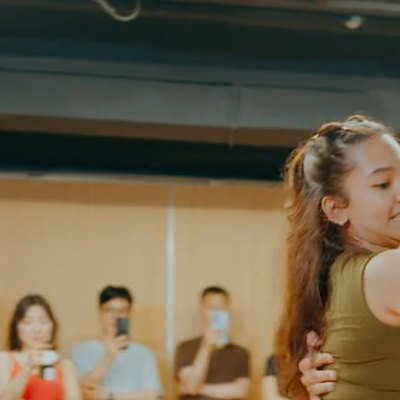
Rishabh y Amanda
리샤브 아만다
Rishabh (lead) & Amanda (follow, India). Dominican and basics focused.

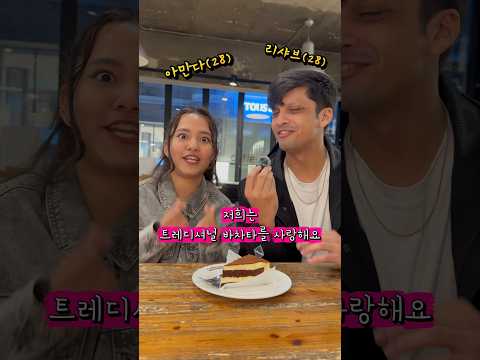 ▶short interview
[CHOA's Shortview 19] "I found my freedom in the Dominican Republic"— Rishabh & Amanda's Dominican deep talk
Meet the person before the class. One shorterview and their dancing hits different.



Latest first6 videos

(Bachata) Dominican bachata clinic for K-bachateros by Amanda feat. the mistake Koreans make most, spotted by Gatsu

(Bachata) The rolly 'kimbap turn' — how to roll a proper kimbap, aka the pretzel turn! - Rishabh & Amanda fundamentals class
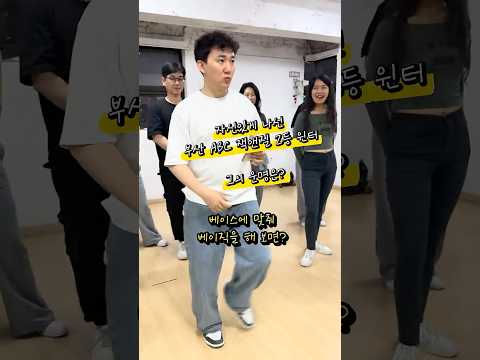
(Bachata) A 100% count of 1💯💯 THE exact point where Jack & Jill scores drop! Rishabh & Amanda basics class feat. Hero & Migle
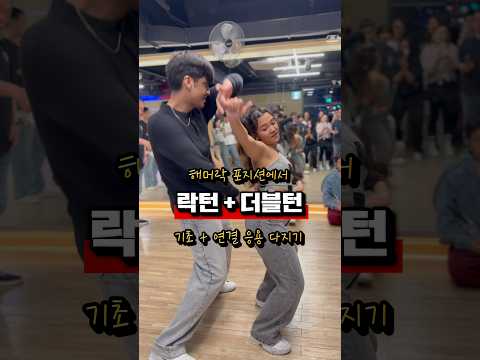
(Bachata) Turn fundamentals built on real bachata principles 💯💯💯 works for every turn 👍 Rishabh & Amanda workshop — K-Bachata Study Camp by Vasion (Gats & Honey)

(Bachata) The global crowd-favorite pattern, the straight-line windmill~ turn it into a turn with frame mechanics — Rishabh & Amanda workshop | K-Bachata Study Camp by Bacion (Gatsu & Honey)

(Bachata) That everyday two-hand loop, made smooth & slick — one-point everyone needs to see~~ Rishabh & Amanda workshop | K-Bachata study camp by Vasion (Gatz & Honey)




 Collecting these slowly, one at a timeThey get better every rewatch
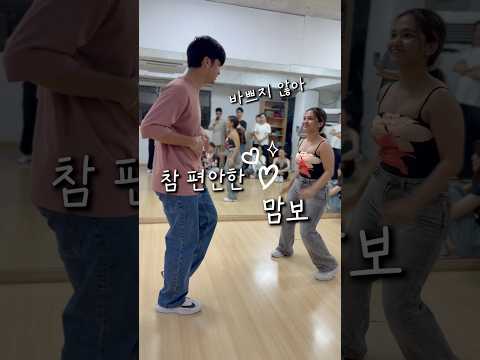
(Bachata) The comfiest mambo~ eyes locked, flowing like water, mambo mambo~ Rishabh & Amanda x Dani J Negro Mate

(Bachata) Such an easy demo~ you don't have to stand out~ dancing itself is the good part 😊 Rishabh & Amanda x DaniJ Negro Mate 😍

(Bachata) 4 minutes 30 seconds of nothing but basics~ and it was more than enough — Rishabh & Amanda basics class demo

(Bachata) Playing like a couple of kids 😍🥰 maybe this is what social dancing is all about... Mumbai's Rishabh ('97) & Amanda ('98) in their first Korea demo — K-Bachata Study Camp by Bacion

(Bachata) When basics meet styling, magic happens 😍 Amanda's lady styling demo

(Bachata) Play with the music on top of a KILLER basic~ Amanda lady styling demo — Romeo Santos, Ayudarme

(Bachata) How is this so delicious to watch~ isn't THIS the social dancing we've been chasing? Charm overload: Rishabh & Amanda workshop demo | K-Bachata Study Camp by Bacion (Gatsu & Honey)

(Bachata) Listen to the music and basics alone are plenty~ Rishabh & Amanda basics class demo

“The difference between an advanced dancer and a beginner comes down to fundamentals. There's really nothing else.”
Explaining what they learned from studying traditional bachata
Watch that moment →“If you want to change that, you bend the knees a little and press down. And you have to use your hips. Push and push and push, so the body doesn't bounce.”
Getting specific about how to fix a lazy basic
Watch that moment →“We're not just dancing to the music — we're trying to become the music itself.”
Explaining their philosophy on their dance style and musicality
Watch that moment →“If you jump in halfway, you get confused about what you're fusing, how, and where. But if you start from the ground up, you build a solid base.”
On the order of learning styles and why the basics matter
Watch that moment →“We want to teach people how to listen. I think that's the part that's really missing.”
Explaining the philosophy they emphasize in class
Watch that moment →“A lazy basic is when your feet are flat on the floor and you're not really using your whole body.”
Demonstrating the basic step and explaining the "lazy basic" he sees a lot among Korean students
Watch that moment →“In everything we do, you have to hear it and move instantly.”
On their philosophy of dancing in immediate response to the music
Watch that moment →“For us, training your ears is just as important as training your body. You have to sync the two up.”
Stressing the balance between musical training and physical training
Watch that moment →“When people learn a move, they just keep repeating that move no matter what's happening in the music.”
Pointing out the problem of dancing without listening to the music
Watch that moment →“If I'm an advanced dancer, it's because my fundamentals are solid.”
Stressing the importance of fundamentals
Watch that moment →“Learning traditional bachata gave me the freedom to dance to the music.”
Looking back on learning traditional bachata from Ace Fusion
Watch that moment →“Traditional bachata is all about the hips. Feet, hips, grounding — that's the core.”
Explaining the difference between traditional and modern bachata
Watch that moment →“The musicality you see actually comes from understanding the genre and traditional bachata.”
Explaining how studying traditional bachata shaped their musicality
Watch that moment →“You hold this pretzel in the chest, not the waist. You're just passing it along.”
Explaining where to hold the pretzel during a straight-line windmill pattern
Watch that moment →“When the direction changes, you have to stay connected to the lead — as long as the lead is guiding the motion.”
Explaining the connection a follower needs to maintain the moment a turn changes direction
Watch that moment →“In our classes, we start the movement big and exaggerated at first, but later we shrink it down. That way you understand the natural connection between the arms and the body much better.”
Explaining the teaching method behind making arm movement look natural
Watch that moment →“Modern bachata is more about hand patterns and salsa-style combinations.”
Comparing the traits of each bachata style
Watch that moment →“Sensual has that flowing, top-to-bottom feel, and fusion is sharper.”
Comparing bachata's different styles (sensual, fusion)
Watch that moment →“It has to move up and down. Don't travel forward. It's more like moving up and down.”
Correcting the common mistake of twisting the hips forward, and explaining which direction the hip movement should go
Watch that moment →“What matters to us isn't a particular style — it's what the music is asking for.”
Explaining their philosophy on their dance style and musicality
Watch that moment →“With patterns that travel in a straight line, you can get away with sloppy arms — but in patterns that change direction, your shoulder line has to stay precise. It can't collapse like that.”
Explaining the difference in arm usage between straight-line patterns and turning patterns
Watch that moment →“You're not gripping the follower's hand tight. It's not about making her hold on like this — you're just passing the connection through.”
On how the lead transmits connection instead of forcing the follower to grip
Watch that moment →“Your hands can't go slack. They have to stay active — that's what makes this move possible.”
Emphasizing the hands' role in holding frame and creating the move
Watch that moment →“When you're keeping the frame, your wrist has to stay soft and loose, but your shoulder and this part right here — that's where the strength goes.”
Breaking down which parts to engage and which to relax while holding the frame
Watch that moment →A word about Rishabh y Amanda? No login.